Trading Halted as Chicago Data-Centre Failure Shakes Global Markets
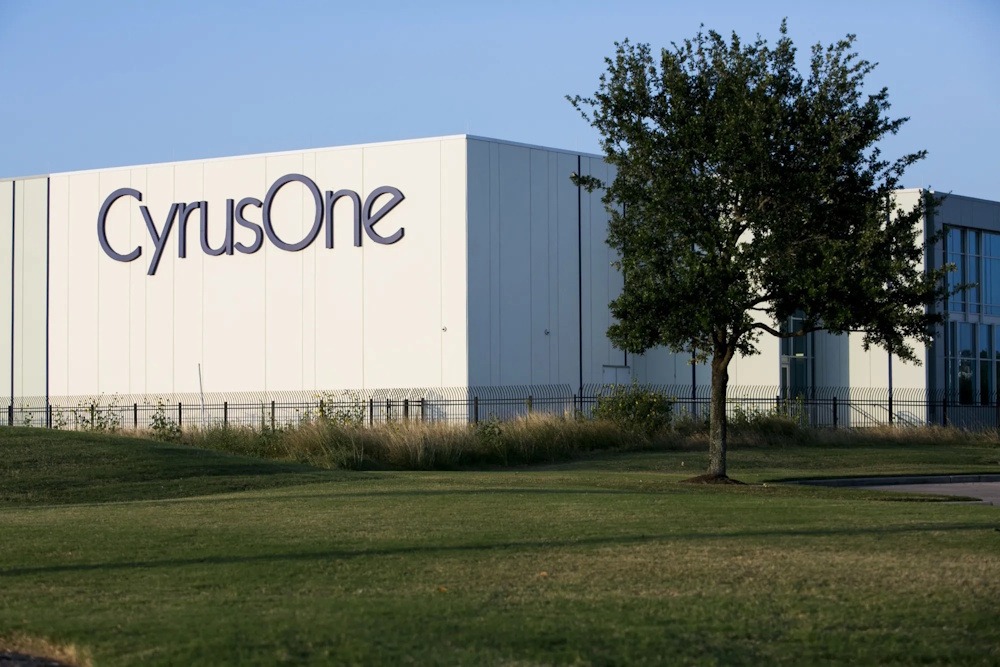
On Thursday, a significant indication of trouble emerged, coinciding with a time when market was largely closed and traders were still partaking in the Thanksgiving holiday in the United States. “Due to technical issues,” CME Group Inc. stated. The issue, it became clear, was the cooling system at a data-center complex located in the suburban town of Aurora, Illinois, approximately 50 miles from Chicago, which functions as the primary hub for trillions of dollars in derivatives traded daily. Inside, temperatures soared past 100F (38C) despite the frigid weather, as reported by individuals familiar with the situation. At that moment, the information suggested that the outage at the facility — operated by private-equity owned CyrusOne — would be short-lived, as stated by a source. Consequently, it decided not to transition to a backup facility located near New York City. However, it would not be long before the significance of that pivotal choice became painfully evident. In spite of numerous emails from promising clients that the issue would be resolved in the “near term,” the malfunction continued, causing significant disruptions to large segments of the global financial system for hours. From Tokyo to London, and eventually New York, trading in everything from gold and oil to wagers on the direction of US interest rates came to an abrupt halt.
Despite the restoration of trading on Friday, disruptions persisted throughout the US session, as CME Direct remained offline for the majority of the day. The outage highlighted a weakness in the increasingly interconnected global markets that depend on a few dominant exchanges. It also raises questions about the contingency plans of CME, one of the world’s largest exchanges for derivatives contracts, and its heavy reliance on the data center it sold in 2016 to CyrusOne, a company now owned by KKR & Co. and Global Infrastructure Partners. “The shutdown shows how concentrated futures markets really are — there just aren’t many alternative venues for the main products,” said Thomas Texier. The 10-hour outage exceeded the duration of the incident that affected CME in 2019, further highlighting the exchange’s critical role in the global markets. In October, the average daily trading volumes for derivatives reached over 26 million contracts, as reported by the group. Although it occurred on a day when US trading was anticipated to be quiet — owing to the Thursday holiday — it nonetheless caused frustration for investors worldwide who were required to make month-end adjustments by transitioning positions from one contract to another. In Singapore, an oil trader remarked that when the initial alert was issued, they believed it was a hoax since the trades and quotes were still flowing in. However, just a few minutes later, the screen unexpectedly froze, and they were disconnected from the Nymex platform. A trader in London believed he was experiencing Wi-Fi connection issues.
“We’ve had to trade some cash Treasuries today and it was noticeably thinner and wider,” remarked James Athey. “Month-end, day after Thanksgiving, CME down. It’s not an ideal combo.” By the end of the trading day Friday, CME had successfully restored all of its trading operations, including CME Direct. CyrusOne stated that the issue arose from a machinery failure impacting the systems responsible for cooling its computer systems, and it was “working around the clock to restore normal operations as quickly and safely as possible.” It announced that it had successfully restarted several chilling systems at limited capacity and deployed temporary cooling equipment to supplement its operations. The specifics surrounding the situation with CyrusOne’s cooling system remain uncertain. According to information on CyrusOne’s website, the data center is equipped with a redundancy system and provides free cooling when temperatures drop below 30F. The 450,000-square-foot Aurora complex has been the central hub of digital operations for CME for almost twenty years. It is well-known among high-frequency traders and market firms, who have long competed for positions around the site to gain an advantage over their rivals by reducing the time it takes for trades by mere fractions of a second.
In 2016, CME made the decision to divest from owning infrastructure, leading to the sale of the site to Dallas-based CyrusOne. CME has entered into an agreement to lease space from CyrusOne for a duration of 15 years, enabling the company to maintain its computer systems at the location that supports its market operations, effectively outsourcing its daily functions. In 2021, KKR and Global Infrastructure Partners reached an agreement to acquire CyrusOne. The center has remained a pivotal hub for traders worldwide, and the effects were widely experienced. During London hours, the trading of US Treasury futures experienced a halt, while gold exhibited erratic movements. Additionally, US crude and palm oil on the Bursa Malaysia exchange were similarly impacted. Despite the restoration of the trading system, certain market makers continued to exhibit reluctance in participating in trades until they received confirmation that the issue had been resolved, as reported by sources. Some viewed the event on what is usually a quiet day in the US as a beacon of hope. “I woke up thinking my Wi-Fi was out,” stated Ritik Katte. “Liquidity is lower than usual, so it seems like the Thanksgiving holiday has been extended.”