Trader’s predictions for Trump’s Asia travel and Xi meeting
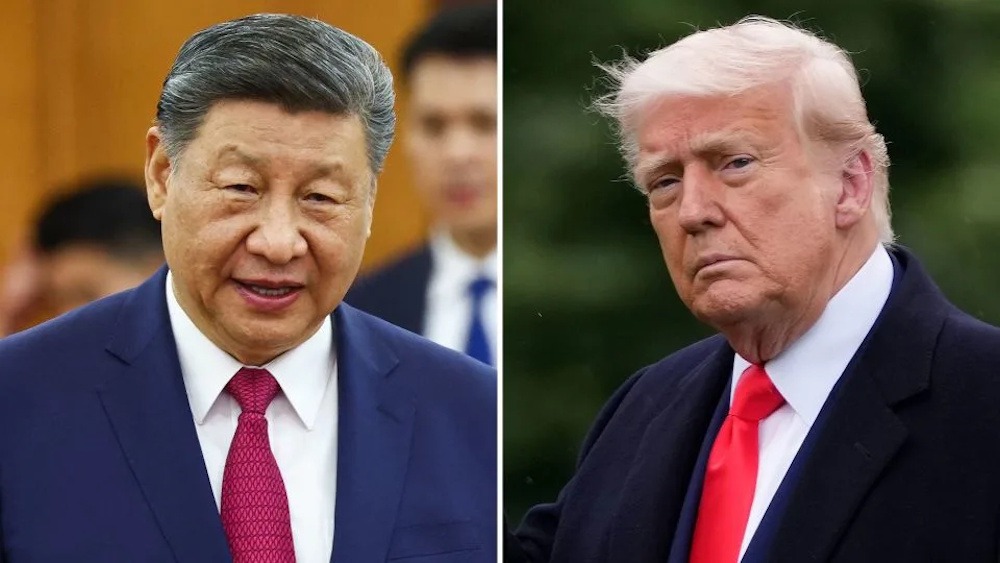
A significant US-China summit scheduled for next week is causing unease among investors, as it carries major implications for various sectors, including rare earths, defense, and agricultural products. US President Donald Trump is scheduled to meet several Asian leaders during his three-nation tour of the region starting Sunday, with a Thursday meeting with Chinese President Xi Jinping drawing significant attention. His visit aligns with the Association of Southeast Asian Nations summit in Malaysia and the Asia-Pacific Economic Cooperation in South Korea. He will also have a stopover in Tokyo. A successful Trump-Xi meeting, as predicted by the US president, will inject calm into global markets and likely revive appetite for risk assets from Asian shares to regional currencies closely tied to China’s economy. Failure to find common ground, however, could reignite volatility and trigger a sharp selloff. “The Trump-Xi meeting could serve as a stabilizing milestone,” stated Xingchen Yu. “This environment supports a strategy of using market dips as buying opportunities, especially in segments with strong structural and cyclical growth drivers such as China tech, India, Brazil, and broader EM equities.” Trump has identified rare earths, fentanyl, soybeans, and Taiwan as the foremost issues between the US and China in anticipation of his Asia trip and the upcoming bilateral trade negotiations set to take place in Kuala Lumpur from Oct. 24 to 27.
During the trip, the US president will aim to sign critical mineral deals with trading partners, concentrating on agreements that establish reliable supply chains and attract additional investments in the US, as stated by senior US officials. The officials refrained from providing details regarding the nature of the deals the president is pursuing. Frictions regarding the critical mineral have resurfaced following Beijing’s announcement of new export restrictions earlier this month on rare earths essential for advanced weaponry, cutting-edge computer chips, and high-tech vehicles. China holds approximately 70 percent of the global supply of the commodity. The tensions have sparked significant stock rallies this year among mining companies such as China’s JL Mag Rare-Earth Co. and Australia’s Lynas Rare Earths Ltd. Chinese authorities have made efforts to ease tensions, assuring foreign businesses this week that the new export controls are not meant to obstruct normal trade. Japan has issued a warning that China’s export controls on rare earths might be employed to hinder its carmaking industry. “A potential de-escalation on the rare earth policy will impact Japan, Taiwan and South Korea,” stated Jason Lui. “It’s a common threat to the three markets.”
The fate of Taiwan, arguably the most contentious issue in China-US relations, will once again take center stage at the upcoming meeting. Investors will closely monitor any new rhetoric from either side, particularly regarding the region’s defence equipment manufacturers and beyond. “Should President Trump choose to play the Taiwan card, it could trigger turbulence in Taiwanese equities and a broader risk-off sentiment across global equities,” said Gerald Gan. “Regional defence and military-related themes, particularly in Korea, China, and Japan, may experience growth due to renewed security concerns and regional destabilisation.” Shares of major Korean defence contractor Hanwha Aerospace Co. have surged more than 200 percent this year, while those of Japan’s Mitsubishi Heavy Industries Ltd. have increased twofold. As the Asean summit unfolds, investors in Southeast Asia will be attentive to updates regarding the US’s proposed 40 percent additional tariff on goods considered “transshipped” through the region — a measure designed to prevent Chinese products from circumventing existing duties. Vietnam stands as the most vulnerable to such a risk, being an export powerhouse that recorded the world’s third-largest surplus with the US last year.
The nation has been striving to broaden its export markets while it works through the details of a trade agreement with Washington. Vietnamese stocks have risen approximately 33 percent this year, positioning themselves as one of the leading performers in Asia, driven by optimism surrounding the nation’s capital market reforms and aspirations for a market upgrade. “If there’s more clarity on the 40 percent transshipment tariffs, investor confidence in the ongoing bull market in Vietnam can get stronger,” stated Ruchir Desai. “That would further support Vietnam’s supply chain relocation narrative.” Also in the spotlight is a commodity of political sensitivity: soybeans. In the past two weeks, global benchmark prices in Chicago have risen approximately 5 percent, as investors speculate that Washington will encourage Beijing to restart its purchases of the oilseed from America. The rally has led to increases in wheat and corn prices as well. For the first time since at least the 1990s, China has not purchased any US soybeans at the beginning of the export season, indicating that Beijing is once again employing agriculture as a tool in the trade war. The Chinese have sought Brazil for unprecedented shipments.
“The US has placed such a high priority on soybeans that to come away empty-handed would be an embarrassment they wish to avoid, while for China, it is a straightforward concession to make in order to secure better terms with other more significant products and sectors,” said Richard Buttenshaw. The Xi-Trump summit and the results of new US-China trade negotiations are poised to recalibrate the atmosphere in foreign exchange markets as well. Any indication of improving relations is anticipated to enhance investor sentiment regarding the yuan and Asian currencies like South Korea’s won and the Taiwan dollar, considering the Chinese currency’s position as a stabilizing force in the region. “US-China tensions may still keep RMB-proxy currencies such as KRW and TWD under pressure, but there are signs that tensions may de-escalate,” stated Christopher Wong. “It’s plausible to say the proxies can recover if there is some extended truce or favorable outcome.” Regarding the yuan, Bank of America strategists anticipate a constructive resolution to trade tensions and assert that China is indicating implicit support for appreciation by establishing the dollar/yuan reference rate beneath the psychologically significant 7.10 level. Beijing is in a position to allow the yuan to appreciate to 6.8 per dollar by the conclusion of the third quarter next year.