Tesla’s AI Shift Boosts Chinese EV Rivals Beyond Cars
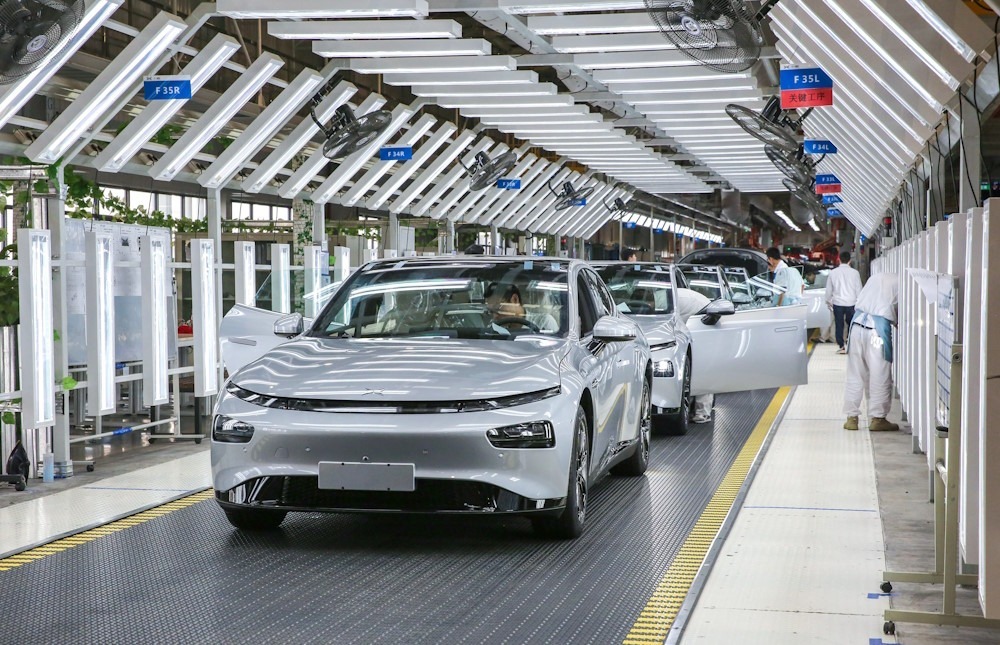
Despite facing challenges with declining sales and profits in China, Tesla continues to exert significant influence over the nation’s electric vehicle manufacturers. Prominent Chinese electric vehicle manufacturers are attentively observing Tesla’s transition from solely a car manufacturer to an entity engaged in artificial intelligence, and are pursuing a comparable trajectory, according to the reports. Companies like Xpeng, Li Auto, and Nio, long regarded as Tesla’s primary competitors in China, are broadening their horizons beyond electric vehicles. According to the report, they are making significant investments in advanced technologies to define what they perceive as the future of transport. Chinese electric vehicle companies are currently developing next-generation vehicles, humanoid robots, flying cars, and even semiconductors. Their objective is to create comprehensive technology ecosystems and provide consumers with new mobility options, all while vying with Tesla in developing sectors beyond conventional automobiles.
The report stated that Phate Zhang remarked that Tesla continues to set the direction for the industry. He stated that the US company’s transition from vehicle manufacturing to AI-driven technologies has already prompted Chinese competitors to enhance their own technological capabilities. Earlier this week, Tesla announced its intention to invest approximately $20 billion this year to streamline its electric vehicle lineup and allocate more resources towards artificial intelligence and robotics. The company announced that it will gradually discontinue its Model S and Model X vehicles, reallocating that factory capacity to the production of its Optimus humanoid robots, according to the sources. The company has also committed to investing $2 billion in Elon Musk’s AI startup xAI and is currently in discussions regarding the establishment of a semiconductor manufacturing facility.
The strategic shift occurs amid mounting pressure on Tesla’s core electric vehicle business. In the previous year, the company’s net profit experienced a decline of 46 per cent, and global deliveries saw a reduction of 8.6 per cent, totaling 1.64 million vehicles. Tesla has ceded its title as the world’s largest pure electric carmaker to China’s BYD, which achieved sales of 2.26 million battery-powered EVs in 2025, reflecting a 28 per cent increase from the prior year. BYD also manufactures plug-in hybrid vehicles. Nonetheless, analysts assert that Tesla continues to be instrumental in influencing the industry. Ding Haifeng, a consultant at Shanghai-based advisory firm Integrity, stated, “Tesla’s reduced importance as an electric vehicle seller does not weaken its wider influence.” He stated that autonomous driving and robotics are the two fields in which Chinese technology companies are striving to close the gap. China remains at the forefront of the global electric vehicle market. According to the report, approximately 70 per cent of electric vehicles sold globally last year were sold on the mainland. Experts indicate that Chinese automakers and suppliers lead the way in EV production and innovation, bolstered by government policies and a consumer base willing to embrace new technologies.
Elon Musk has consistently emphasized Tesla’s advantages in AI and autonomous driving, asserting that these features validate the company’s elevated stock market valuation. Chinese executives express a consensus perspective. The co-founder of Nio stated, “Any ambitious carmaker today must aim to transform itself into an AI-focused company.” Xpeng CEO stated that his company is advancing the development of flying cars and robots via its subsidiaries, with plans to initiate mass production this year. The company aims to sell one million robots each year by 2030 and is actively working to reduce costs, making robots accessible for household use in China.