Supreme Court’s Tariff Ruling Clouds Fed Rate Outlook
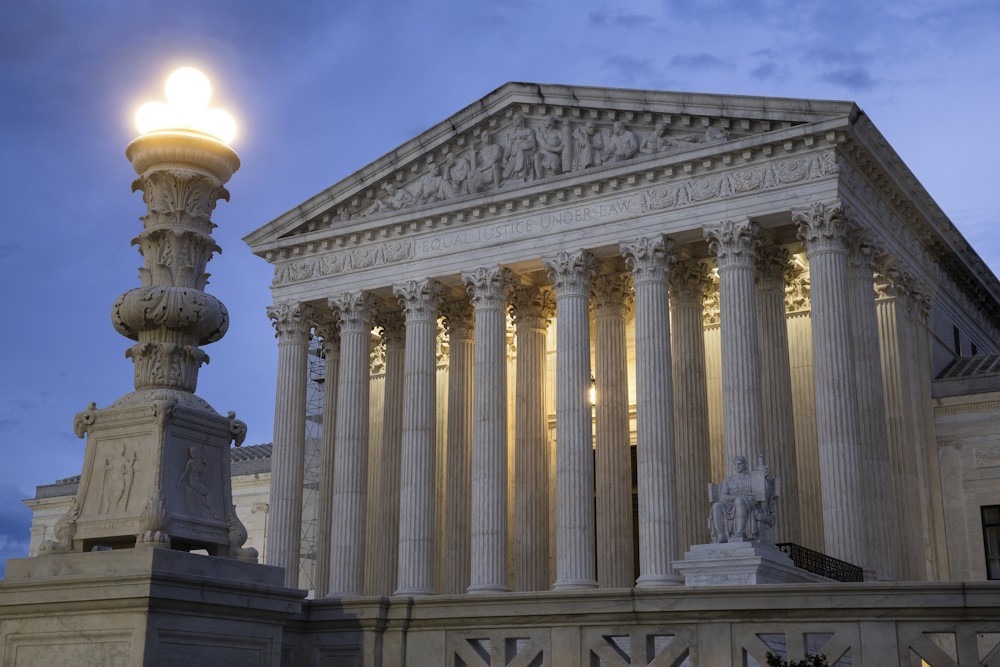
The Supreme Court’s ruling against a broad set of the Trump administration’s tariffs introduces new challenges for Federal Reserve policymakers, who have dedicated the past year to evaluating the potential impact of significantly higher import taxes on inflation and the overall economy. Numerous officials from the Federal Reserve have recently expressed growing confidence that the price increases driven by tariffs from the previous year would begin to subside. Currently, they confront ambiguity regarding the possibility of the process being reversed or halted as the administration considers alternative methods to reintroduce the same taxes under different legal authority. Throughout this period, the Fed finds itself uncertain about the economic repercussions, which complicates its decisions regarding the timing and possibility of resuming interest rate cuts.Is there an obligation to reimburse the companies that have contributed?…”If so, that’s a lot of disruption,” stated Atlanta Fed President Raphael Bostic during his remarks. “Does this lead businesses to return to previous models regarding their supply sources?…Will there be an alternative method to apply all those tariffs uniformly, or are there limitations?”
The uncertainty was palpable in interest rate futures markets, where traders placed their bets on the trajectory of borrowing costs. On Friday, markets experienced fluctuations as investors weighed the possibility of the Fed cutting rates in June against the option of delaying until July, a situation complicated by the recent Supreme Court ruling. Uncertainties linger regarding whether businesses will defer anticipated price hikes, which could lead to a decrease in inflation, or if they will hold off on hiring and investment as many did in the previous year. Treasury Secretary Scott Bessent stated that the legal battle concerning refunds of the invalidated taxes might extend for “weeks, months, years” before reaching a resolution.
Meanwhile, the administration plans to impose alternative import levies under what Bessent called well-tested authorities to fill the tariff gap left by the Supreme Court’s 6-3 decision.”No one should expect that the tariff revenues will go down,” Bessent told the Economic Club of Dallas. In a prompt reaction to the ruling, President Donald Trump declared an immediate new 10 percent tariff on imports from all countries, supplementing the existing levies. St. Louis Fed President Alberto Musalem stated that if the new tariffs are essentially one-for-one replacements of the old IEEPA tariffs, his economic forecast would not change significantly. He remains committed to engaging directly with CEOs to gain insight into their strategies for managing the transition.
“It is possible that as companies begin to think of how they’re going to transition from paying IEEPA tariffs to paying a different kind of tariffs, that could introduce a period of uncertainty there for companies,” Musalem told. For Dallas Fed President Lorie Logan, the ruling introduces further uncertainty. “It’s something we’ll be paying attention to, but I don’t have any specific perspective,” she stated in New York.