Supply Chains Face New Era of Volatility Amid Rising Risks
A new report released on Monday indicates that global supply chains have entered a phase of structural volatility, compelling companies and governments to reassess their investment and production strategies. As a result, three in four business leaders are now placing a higher priority on resilience as a key driver of growth. The report stated that this volatility reflects a fundamental rewiring of global value chains, driven by geopolitics, industrial policy, the energy transition, and technological acceleration. It emphasized the need to define strategic imperatives for industry and establish a blueprint for industrial policy, while a complementary interactive tool assists businesses and governments in assessing manufacturing risks, strengths, and gaps.
The study referenced a case from India highlighting Tamil Nadu’s stable and predictable investment climate, noting that the state has emerged as one of India’s most dependable industrial destinations due to its political stability, consistent regulation, tailored incentives, robust infrastructure, and skilled workforce. For more than 15 years, its consistent policies have drawn long-term global investments. Japanese firms highlight the ease of operations and swift approvals, whereas VinFast, a Vietnamese electric vehicle manufacturer, constructed its 400-acre, 50,000-unit EV facility in merely 17 months—significantly quicker than the typical 24-36 months—attributing this achievement to Tamil Nadu’s proactive policies and the readiness of its workforce.”This stable, investment-friendly environment positions the state as a dependable hub in global supply chains,” it noted.
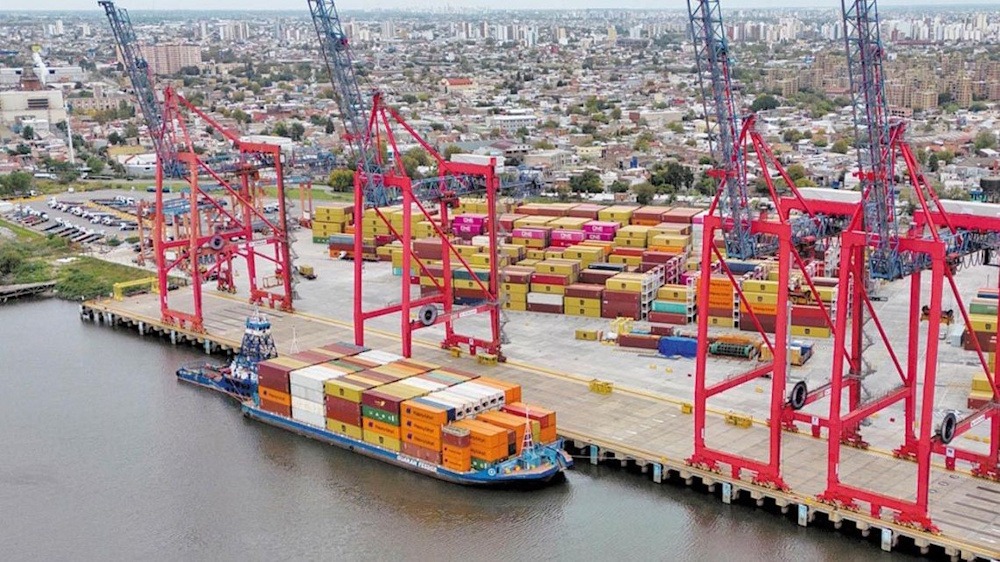
The report also highlighted examples from Ireland, China, and Qatar, among others, illustrating how targeted national approaches are already influencing manufacturing competitiveness. “Volatility is no longer a temporary disruption; it is a structural condition leaders must plan for,” stated Kiva Allgood. Today, competitive advantage is derived from foresight, optionality, and the coordination of ecosystems. “Companies and countries that build these capabilities together will be best positioned to attract investment, secure supply and sustain growth in an increasingly fragmented global economy,” Allgood added. The magnitude of the change is already apparent. In 2025 alone, tariff escalations between major economies reshuffled more than $400 billion in global trade flows, while disruptions across major shipping routes pushed container shipping costs up 40 percent year on year, signalling a decisive move away from short-term shocks towards enduring uncertainty.
Simultaneously, manufacturing output in advanced economies is experiencing its slowest growth since 2009, as over 3,000 new trade and industrial policy measures were implemented worldwide in 2025 alone—this figure surpasses three times the annual level noted a decade earlier. Together, these forces highlight the importance of supply chain resilience as a key factor in national competitiveness and corporate strategy, according to the WEF. In 2026, supply chain disruption will be a persistent and structural issue. “Geopolitical fragmentation, shifting trade rules and labour shortages are all redefining how value is created and moved,” said Per Kristian Hong.