SpaceX got billions from US government but pays minimal tax
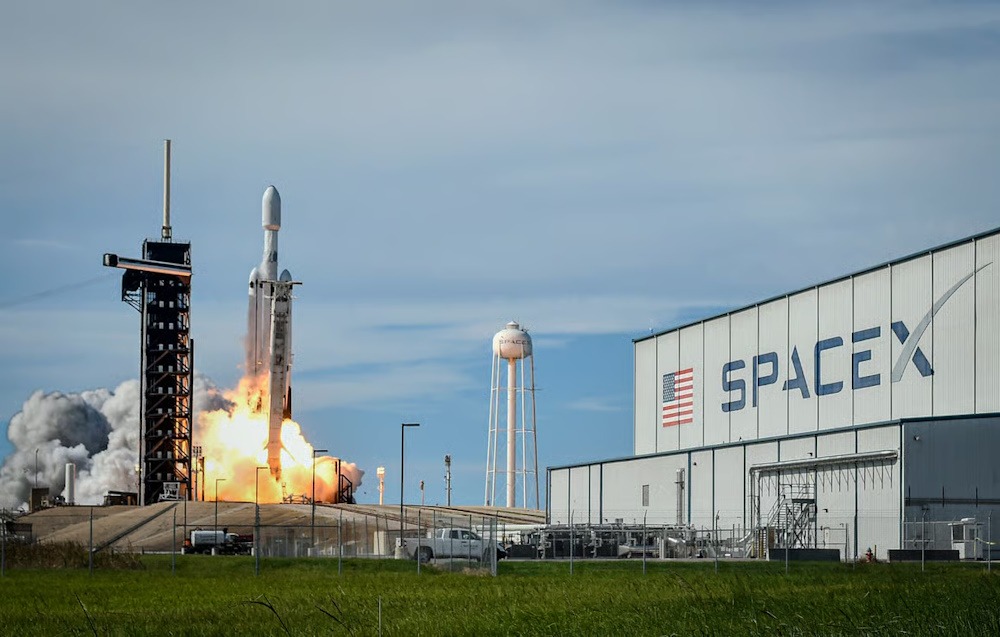
SpaceX, the rocket and satellite internet company founded by Elon Musk, has secured billions of dollars in federal contracts throughout its more than twenty-year history. Internal company documents reviewed by NYT suggest that SpaceX has likely paid little to no federal income taxes since its inception in 2002. Furthermore, the company has reportedly informed investors that it may never be required to pay any taxes at all. The financial details of the rocket manufacturer have remained under wraps for an extended period, as the company operates as a privately held entity. Documents reviewed reveal that SpaceX is poised to take advantage of a legal tax benefit, enabling the company to utilize over $5 billion in losses accumulated by late 2021 to offset future taxable income. In 2017, during his first term, US President Donald Trump implemented a change that removed the expiration date for the tax benefit applicable to all companies. SpaceX stands to benefit significantly, as nearly $3 billion of its losses can be indefinitely applied against future taxable income.
Tax experts emphasized that the absence of $5 billion in federal income taxes is both substantial and notable for a company that has depended on contracts with the US government to an unusual degree. SpaceX collaborates closely with the Pentagon, NASA, and various other agencies, positioning itself as a crucial player in national security. Documents reveal that in 2020, nearly 84 percent of the rocket maker’s revenue was derived from federal contracts, a statistic that had not been disclosed before. Larger tech firms, some of which have capitalized on the tax benefit, frequently contribute billions in federal income taxes. Microsoft stated that it anticipated paying $14.1 billion in federal income taxes for its most recent fiscal year. SpaceX is eligible to utilize the tax benefit regardless of the success of its business. According to information shared privately with certain stakeholders, the company reported approximately $5 billion in earnings from its core operations last year, a significant increase from $2.6 billion in 2023.
Danielle Brian, executive director of the Project on Government Oversight, an organization dedicated to investigating corruption and waste within the government, stated that the tax benefit has traditionally been designed to incentivize companies to remain operational during challenging periods. She remarked that it was “quaint” that SpaceX was using it, as it “was clearly not intended for a company doing so well.” Musk has transformed SpaceX into a powerhouse in the global arena, asserting its dominance in the space sector with its advanced rockets and the Starlink satellite internet service. The business empire has long regarded it as a jewel in its crown, serving as a vital source of wealth and power, alongside the electric vehicle company, Tesla. Musk has gained a prominent position on the global stage, enabling him to influence discussions on geopolitics.
Similar to numerous tech start-ups, SpaceX incurred losses while investing billions of dollars into the development of its business. Uber, Amazon, Tesla, and various other tech companies experienced a prolonged period of unprofitability. SpaceX’s expansion has led to a valuation exceeding $350 billion, establishing it as one of the most valuable private companies globally, as reported by the start-up tracker PitchBook. Multiple news organizations have covered various facets of SpaceX’s financial disclosures, which the company shares with its investors and other stakeholders. The documents examined, which include income statements and balance sheets spanning 23 years, provide fresh insight into SpaceX’s revenue sources, investors, and tax obligations.
SpaceX has seemingly contributed to income taxes throughout the years, although it is probable that these payments were not made to the federal government. The company disclosed in a recent document that it anticipated paying $483,000 in income tax to foreign governments and $78,000 in state income tax for the year 2021. In a separate disclosure, it was reported that the company paid $6,000 in income taxes for the years 2020 and 2021. However, the report did not specify whether these payments were made to federal, state, or local governments. Musk has frequently highlighted SpaceX’s contributions to executing missions for NASA and various other agencies. In June, he took to social media to announce a significant achievement for the company, stating that its “commercial revenue from space will exceed the entire budget of @NASA next year.”