Paramount’s Ellison bought Warner Bros. with money and politics
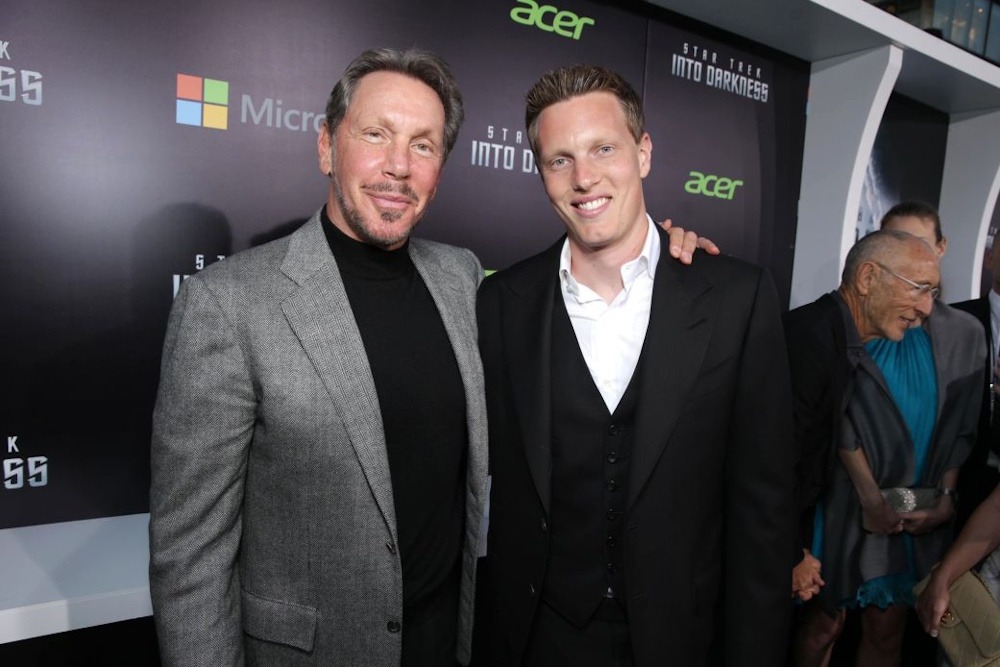
Following the conclusion of a meeting on Thursday afternoon, the board of Warner Bros. Discovery Inc. saw Chief Executive Officer David Zaslav reach out to David Ellison and Ted Sarandos to inform them of the outcomes. The board determined that Ellison and Paramount Skydance Corp.’s most recent bid was superior to that of Netflix Inc. and Sarandos. Ellison’s advisers were preparing for at least four more days of intense effort. Netflix possessed the right to match the offer as stipulated in its agreement with Warner Bros., while Paramount was prepared to engage in multiple rounds against the streaming service. However, a few hours later, Sarandos reached out to Zaslav again to convey that Netflix had decided to withdraw. Warner Bros. and Paramount were taken aback. In the initial round of negotiations, Netflix surpassed Paramount’s bid, with Sarandos, the co-CEO of the company, dedicating the past week to publicly defending the agreement. On Friday, Warner Bros. and Paramount revealed that they have entered into a definitive merger agreement. The dramatic turnaround has positioned Paramount to acquire Warner Bros. in a $110 billion transaction that would make the Ellison family owners of one of the largest entertainment empires in the increasingly global industry. The merged entity would possess two prominent Hollywood studios, HBO, CBS, and numerous cable networks. This account draws upon discussions with approximately a dozen individuals who were involved in the deal. The transaction represents the culmination of a months-long campaign by Ellison to secure the support of Warner Bros. shareholders, regulators, and the White House. Ellison and his team actively engaged with politicians to challenge Netflix’s deal, cautioning Hollywood about its potential ramifications.
Ellison’s relentless pursuit highlights the precarious — some critics might argue desperate — condition of Paramount, which generates all of its profits from television networks that draw diminishing audiences each year and possesses a streaming service that is significantly smaller than its larger rivals. The newly merged entity will dedicate years to cutting expenses in order to reduce a significant debt burden and is expected to encounter a challenging regulatory examination. However, for Ellison, a 43-year-old cinephile who is just beginning his journey as a Hollywood mogul, it was a deal he felt he needed to secure. According to MoffettNathanson, adding one of Hollywood’s great studios and a premium streaming service to his portfolio “could finally transform two subscale media companies into a more serious industry player.” Despite having just spent nearly two full years pursuing Paramount, Ellison initially underestimated the demands involved in acquiring Warner Bros. He initially presented a series of offers that the company’s board deemed insufficient, thereby creating an opportunity for rival bidders. Despite the entrance of Comcast Corp. and Netflix into the competition, Paramount maintained its confidence. It was the sole suitor prepared to acquire all of Warner Bros. When Warner Bros. turned down Paramount’s offer and revealed a partnership with Netflix on Dec. 5, Ellison and his team were left in disbelief. They swiftly initiated a counteroffensive.
On Dec. 8, Paramount announced a tender offer to buy shares directly from shareholders and held a conference call in which Ellison articulated his belief that the Paramount deal was superior. Ellison subsequently participated in a summit organized by UBS Group AG in New York, seeking out shareholders receptive to his proposal. “We want to bring our proposal directly to WBD shareholders to evaluate a clearly superior proposal across both economic value and regulatory certainty,” Ellison stated. “And we believe they deserve that choice.” Ellison subsequently withdrew from public view, permitting Gerry Cardinale, a key investor, to act as his spokesperson. Cardinale critiqued the Netflix deal, suggesting that the Warner Bros. board exhibited bias against Paramount. Paramount took steps to address certain concerns raised by Warner Bros. behind the scenes. The board expressed concern that Paramount was receiving funds from the Middle East and China, which could restrict its operational capabilities during the waiting period for the deal to finalize. Warner Bros. expressed significant concern that Paramount might withdraw or alter the terms at the final moment. Paramount was borrowing tens of billions of dollars — an amount exceeding twice the company’s market capitalisation. Ellison’s father was the reason it remained in the game, as he had not yet fully backed the deal.
Paramount subsequently made further offers that responded to some, though not all, of the concerns, including price. As Ellison’s financial advisers focused on the deal points, he and his legal team traversed the globe to garner support. The assertion was made that Netflix’s agreement was not only anticompetitive but also a component of a larger strategy aimed at monopolizing the streaming market. They inundated the area with assertions that Netflix and Warner Bros. considered misleading and occasionally inaccurate, yet the media, consumers, and politicians were swift to amplify. Individuals familiar with Warner Bros. remarked that Paramount’s team of public relations consultants must be compensated for each press release they produce. In contrast, Netflix, having secured a signed deal, adopted a more measured public stance. Ellison made multiple trips to Washington, engaging in discussions with President Trump, sharing meals with Trump’s adviser Stephen Miller, and responding to inquiries from senators. Ellison’s outreach was strengthened by his father’s extensive history of political donations. He also visited Europe, engaging in discussions with French leader Emmanuel Macron, the UK culture secretary, and the proprietors of local theatres. Recently, Ellison and his chief legal officer, Makan Delrahim, traveled to the San Francisco Bay Area to engage with Democratic attorneys general. Paramount also requested a review from the US Justice Department under an expedited timeline for tender offers. By expediting that process and finalizing it in less than three months, Paramount positioned itself to propose a swifter alternative to Warner Bros., which could have been mired in the Netflix review until 2027. Netflix and Warner Bros. characterized all this activity as mere noise, diverting attention from an undeniable truth. They had an agreement, while Paramount did not.
However, Paramount’s initiatives were effective in sparking bipartisan apprehension regarding Netflix. The Senate Judiciary Committee convened a hearing to investigate the implications of the acquisition on employment in the US, competition within Hollywood, and the overall vitality of movie theaters. Republican attorneys general urged the DOJ to initiate a lawsuit aimed at blocking the deal. Movie theater owners, documentary makers, and unions expressed their objections as well. Simultaneously, an increasing number of Warner Bros. shareholders started to push for the entertainment giant to interact with Paramount. There were concerns that Netflix’s deal would undergo an extensive regulatory review. They appreciated that Paramount was proposing to acquire the entire company, whereas Netflix’s deal would necessitate Warner Bros. to separate its TV networks into a distinct entity. Pentwater Capital Management, the seventh-largest shareholder of Warner Bros., addressed a letter to the company, asserting that its board had made a mistake by not engaging with Paramount regarding a revised bid. Following Paramount’s latest approach — its ninth, which featured a commitment to enhance its offer and concessions on critical terms — the board of Warner Bros. determined that it could no longer overlook these developments and sought Netflix’s approval to proceed with discussions.
According to sources, Warner Bros. anticipated that Netflix would proactively modify its own agreement to exclude Paramount. Instead, Netflix permitted the discussions to take place. Having observed Paramount falter in past negotiations, Sarandos challenged Paramount and the Ellisons to “put their money where their mouth is.” According to sources, Warner Bros. believed it was time for Paramount to either make a definitive move or remain silent after months of assurances regarding an increased offer. That moment proved to be a pivotal turning point. Instead of claiming that Paramount’s offer surpassed Netflix’s, Warner Bros. detailed the steps Paramount would need to take to secure a victory — framing the negotiations on its own terms. As Paramount and Warner Bros. geared up to restart negotiations, executives from both companies expressed a sense of pessimism. The two camps engaged in weeks of unproductive discussions last year, during which Paramount missed deadlines and issued threats to Warner Bros. Following five days of negotiations — and with merely 48 hours remaining in the negotiation window — Paramount had not yet presented a new offer. The two sides had engaged in minimal interaction, merely exchanging a handful of documents, while the subject of financing had scarcely been addressed. Advisors to Warner Bros. expressed concern that they might find themselves facing another statement from Paramount later in the week, accusing them once more of failing to engage in a constructive dialogue.
Yet Paramount was ready to seize its last chance. Ellison reached out to Zaslav on Saturday night to convey that Paramount would be addressing all of the company’s outstanding concerns. Paramount delivered the final offer and accompanying documents late Saturday night. The two sides raced against the clock for the next two days in an effort to finalize an agreement, only pausing mid-discussion at midnight on Monday due to legal obligations. By Tuesday, Warner Bros. had concluded that the deal could pave the way for a more advantageous offer, enabling them to continue discussions and finalize the terms. Subsequently, even Paramount expressed astonishment at the rapidity with which a deal was finalized. As Paramount and Warner Bros. negotiated their differences, Sarandos launched a press offensive, articulating his case for the acquisition through a series of interviews. “This deal offers great value to the WBD shareholders,” Sarandos stated during an interview. “It provides significant long-term value to Netflix. We have a normal regulatory path ahead.” Few in Washington or Hollywood came to Netflix’s defense. For months, Netflix’s shareholders had been expressing their dissent regarding the deal. Shares in the company have fallen over 30% since Netflix initiated its pursuit, resulting in a loss of more than $100 billion from the streamer’s market capitalisation. Despite the challenges, Netflix continued to stand firm in its pursuit of the deal.
Netflix’s commitment to the deal faltered following Paramount’s significant enhancement of its offer over the weekend. Netflix recognized that Paramount was steadfast, and there were murmurs suggesting that the company was prepared to engage in multiple rounds of a bidding war to secure the agreement. Netflix decided early in the week to withdraw after Warner Bros. officially deemed the offer superior, according to sources familiar with the situation. By mid-week, Warner Bros. started to perceive that Netflix may not raise its offer. Sarandos returned to Washington on Thursday, engaging in discussions with the DOJ, US Attorney General Pam Bondi, and other officials. In a previous meeting, President Donald Trump advised Sarandos against overextending financially for the company. Sarandos communicated with the president once more on Thursday, stating: “I took your advice,” as reported by an individual knowledgeable about the discussion. Sarandos emerged with a sense of optimism that the deal was poised for approval, as per sources acquainted with the discussions, yet had already resolved to make concessions. That evening, Netflix informed Warner Bros. that it would not be raising its offer and subsequently announced the news about an hour later. Shares in Netflix surged as shareholders rejoiced at the retreat. Netflix secured a $2.8 billion breakup fee, effectively avoiding potentially years of distracting legal battles and complicated integrations of new businesses.
Nonetheless, Paramount remains in a precarious position. The European Commission is currently examining the sale of Warner Bros., alongside several state attorneys general, notably from California. “Paramount/Warner Bros is not a done deal,” California Attorney General Rob Bonta stated. “These two Hollywood titans have not cleared regulatory scrutiny – The California Department of Justice has an open investigation, and we intend to be vigorous in our review.” If certain US states decide to contest the deal, it may lead to a scenario reminiscent of the 2020 merger between Sprint and T-Mobile. In that instance, the DOJ reached a settlement, while a coalition of states spearheaded by New York and California contested the agreement in court, ultimately facing defeat. At that time, Delrahim was at the helm of the DOJ, serving as Ellison’s current adviser. According to sources, DOJ antitrust lawyers have persistently inquired about the competitive impact of the deal. A spokesperson for the DOJ chose not to provide a comment. Ellison spent a year persuading Shari Redstone to sell him Paramount, followed by another year convincing the Trump administration to approve the deal. He emerged victorious after a lengthy and contentious public battle against one of the most powerful companies in the world. Now, assuming he can secure regulatory approval, Ellison will need to fulfill the commitments he has made to boost production and release 30 movies annually in theaters. Despite all his efforts thus far, he is still confronted with the most significant challenge of his career — revitalizing two faltering Hollywood giants as emerging technology threatens the very foundation of their business.