Luxury Market Boosts Second-Hand Watch Prices
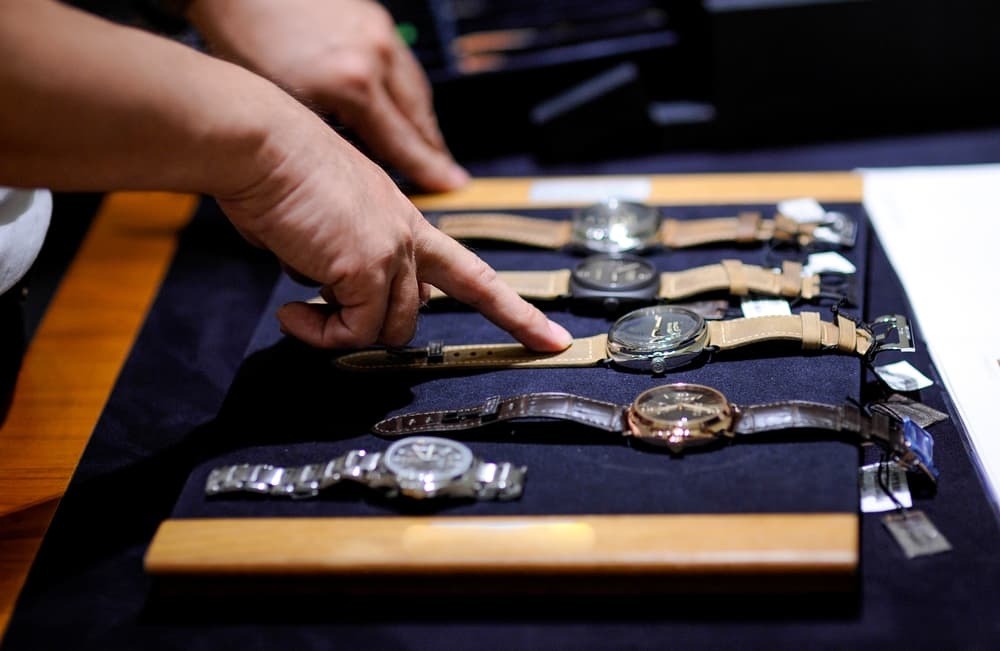
The decline in second-hand watch values has reached its conclusion. Following five years of fluctuations, the prices for pre-owned watches are currently experiencing a consistent increase. Advancement from this point hinges on the continuation of two trends: the increase in new watch prices and the upward trajectory of equity markets. While there’s a good chance of the former, the latter appears to be less certain. The fluctuations in secondary-market watch prices began during the pandemic, as consumers, buoyed by crypto gains and stimulus payments, eagerly acquired pre-owned models online. However, the bubble burst in the spring of 2022, as Bitcoin experienced a decline and interest rates increased, compelling speculators who had borrowed to enhance their collections to sell. The most recent report reveals that prices for 300 models across 10 brands increased by 1.9 percent in the final quarter of 2025, in comparison to the previous three months. This strength is a continuation of the progress made earlier in the year. This pivotal moment illustrates the trajectory in the pricing of new watches. Tariffs have compelled watchmakers to increase prices in the US, with some also making adjustments worldwide. Rolex SA, which refrained from increasing prices last autumn, participated this month, with an estimated 6 per cent escalation. As prices rise, an increasing number of buyers are seeking options in the secondary market, where — apart from the leading three privately held brands: Patek Philippe, Rolex, and Audemars Piguet — the majority of brands are available at prices lower than retail.
Considering the Bitcoin rally and the record-setting performance of global equities last year, it is not surprising that secondary prices experienced a rise of 4.9 percent in 2025, marking the first increase since 2021. The ongoing recovery appears to be more extensive than the progress observed earlier in 2025. At that point, the increases were spearheaded by Patek Philippe, Rolex, Cie Financiere Richemont SA’s Cartier, and Swatch Group AG’s Omega, while prices continued to decline for other brands. In the final quarter, they achieved gains for 21 of the 35 brands monitored by Morgan Stanley. Increasingly, buyers are coming to understand that with average discounts ranging from 30 per cent to 40 per cent on new models from brands beyond the top three, there are valuable opportunities available. The revival may also reflect the current trends in the market for new timepieces. According to reports, there has been a noticeable disparity between the outperformance of the most sought-after names and the rest of the market. In a positive development for the wider industry, Richemont’s watchmaking division experienced a 7 per cent increase in sales (excluding currency fluctuations) during the three months leading up to Dec. 31, surpassing analysts’ forecasts. This category excludes Cartier but includes prestigious brands like Jaeger-LeCoultre, A Lange & Sohne, Vacheron Constantin, and IWC Schaffhausen.
Undoubtedly, charging more contributed to the situation. However, the volume sold also saw an increase, with demand distributed across various brands and regions, notably in the US and the Middle East. Strategic moves likely contributed significantly. Richemont is implementing the strategy that successfully established Cartier as Gen-Z’s preferred timepiece by reintroducing Jaeger-LeCoultre’s most recognized model, the Reverso, and it appears to be effective. Smaller sizes, in particular, are gaining popularity. The rising prices of new watches is one factor that may further bolster the values of second-hand timepieces. Although the tariff-related increases are not expected to recur this year — Switzerland’s levy decreased from a punitive 39 percent to 15 percent in November — watchmakers are confronted with rising costs due to more expensive gold and the dollar’s depreciation against the Swiss Franc. This situation compels them to either sell more watches in the US or increase prices to maintain the same sales value. Additionally, certain peculiarities of the market may play a role in maintaining elevated prices and interest rates. Consider Cartier’s Panthere, which has spearheaded the trend for smaller, predominantly gold, timepieces. The rising popularity is contributing to the resurgence of other models, including Rolex’s 26mm Lady Datejust, which was discontinued in 2015. The small Rolex, exuding the same vintage charm as the Panthere, can be acquired for approximately half the cost of a comparable new model from the brand. As a result, multiple 26mm Lady Datejusts emerged as the top-performing Rolex models last year, as reported by WatchCharts.
For watchmakers, a robust secondary market presents a double-edged sword. Price increases serve as a clear indicator of brand desirability; however, the purchasing of used models by consumers diverts sales from new releases. One approach to address that trend is for watchmakers to enter the resale market themselves, as Rolex has done. Sales through its so-called Certified Pre-Owned Program surpassed $500 million in 2025, increasing from $319 million in 2024, as reported. Nonetheless, the resilience of the used market continues to be tenuous. Although a new trade dispute has been averted, the recent shocks to stocks and bonds serve as a stark reminder that buyers’ confidence can be easily undermined by economic and political upheaval. Even in the midst of the resurgence, watch enthusiasts are less enthusiastic than they were a few years ago, when many purchased timepieces with the intention of flipping them for a profit. Haunted by the collapse four years ago, an increasing number of buyers are apprehensive about the prospect of overpaying. If you are considering investing in some exquisite wrist candy, there are still opportunities for great deals. However, time is running out.