Japan’s PM meets Trump for Strait of Hormuz cooperation
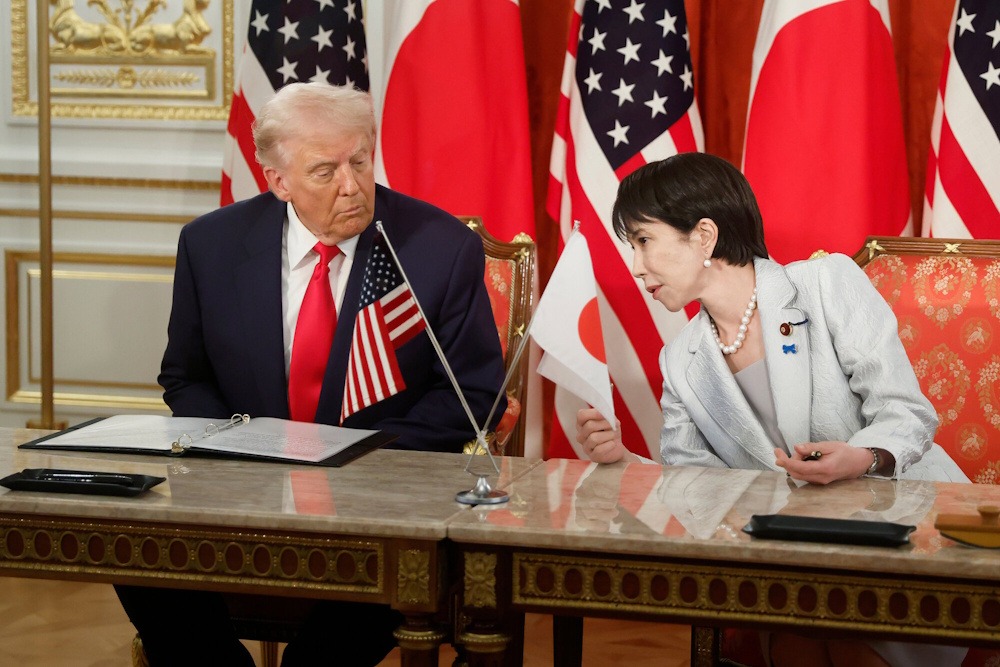
The meeting that Japanese Prime Minister Sanae Takaichi will hold at the White House on Thursday initially appeared to be an excellent chance to engage President Donald Trump before his upcoming trip to China. However, the ongoing conflict in Iran and Trump’s failed appeal to Japan and other countries for assistance in safeguarding the Strait of Hormuz have resulted in a postponement of the trip to China, and Takaichi is expected to face significant scrutiny. Trump has consistently voiced his grievances both on camera and online regarding US allies, such as Japan, who have turned down his appeals to assist in protecting the vital waterway used for oil and gas transportation. “In fact, speaking as President of the United States of America, by far the most powerful country anywhere in the world, WE DO NOT NEED THE HELP OF ANYONE!” Trump exclaimed on Truth Social after his initial call for help was rebuffed. The prime minister recognized prior to her departure from Japan that she anticipates her meeting with Trump will be “very difficult.” She and her ministers have firmly stated that Washington did not make an official request for Japanese warships to support the US-Israeli operation.
Japan, an important US ally in Asia, is among the nations that Trump referenced on Tuesday as he criticized the insufficient support regarding the Strait of Hormuz, before asserting that such assistance was unnecessary. Trump is anticipated to exert “enormous pressure” on Takaichi, according to Kurt Campbell. Campbell stated that he has never witnessed a meeting between US and Japanese leaders with stakes this high. To advocate for Japan’s interests, he stated, Takaichi will seek to indicate that Japan is included in the US strategy in the Middle East. “She’s going to want to come out of that as a partner in this case and realise that if she can do that, that she can translate that potentially into the president listening more to Japanese concerns about Taiwan or other issues,” Campbell said. The limitations on Japan’s engagement in Iran stem from a clause in its post-World War II constitution that prohibits the use of force, except for the defense of its own territory. The military of the country is referred to as the Self-Defence Force. Christopher Johnstone, a partner and chair of the defence and national security practice at The Asia Group, stated that Japan could assist with mine-sweeping and has maintained “a small naval presence” in the region as part of an anti-piracy mission for at least a decade.
However, for Takaichi to participate in the US mission, she would need to overcome “an exceptionally high bar politically to invoke collective self-defence,” a precedent that has yet to be established. Takaichi aimed to prioritize trade and security in the Indo-Pacific region. She had her initial meeting with Trump in October in Tokyo. As Japan’s first female prime minister and a protégé of former leader Shinzo Abe, she is part of a legacy that fostered a strong bond with Trump. She is a staunch conservative and a long-time advocate for Taiwan, and her remarks regarding Japan’s readiness to offer military assistance to the island have escalated tensions with China. Ahead of her meeting with Trump, Takaichi aimed to emphasize trade, fortifying the US-Japan relationship, and addressing security concerns. Japanese officials stated that the two sides would collaborate to enhance cooperation in regional security, critical minerals, energy, and addressing issues related to China. China considers self-governed Taiwan, a key player in the US computer chip production, to be its sovereign territory and has asserted that it would resort to force if necessary.
However, in addition to inquiries regarding assistance in the Strait of Hormuz, the worldwide ramifications of the Iran conflict have placed the Japanese leader in a more challenging position with Trump as she strives to secure US commitment to the Indo-Pacific region. Japan views China as an escalating security threat and has advocated for a military buildup on southwestern islands adjacent to the East China Sea. However, the US has relocated certain troops from Japan to the Middle East, thereby diminishing a counterbalance to China’s influence. Takaichi is anticipated to express apprehensions regarding troop movements with Trump, coinciding with China’s extensive military exercises around Taiwan. “This raises the prospect that – once again – the United States will be distracted and bogged down in the Middle East at a time when the deterrence problem in East Asia has never been greater,” Johnstone said.