How Elon Musk’s AI-Powered ‘Grokipedia’ Differs from Wikipedia
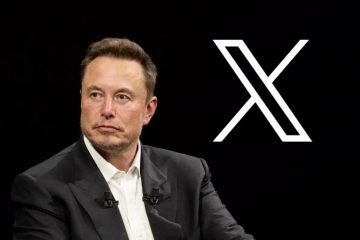
Billionaire Elon Musk on Monday unveiled an early version of ‘Grokipedia’ — a platform he is promoting as an alternative to the online encyclopedia Wikipedia. A report states that Grokipedia was developed by artificial intelligence and endorsed by Elon Musk as a “less biased” alternative to Wikipedia. The report indicated that while Grokipedia resembles Wikipedia in style and layout, featuring entries on subjects like ChatGPT, Diane Keaton, and the 2026 FIFA World Cup, it is significantly smaller in scope, less transparent in its operations, and exhibits a distinctly more right-leaning bias in the presentation of certain articles. Musk first announced Grokipedia on September 29 in response to an X post by US President Donald Trump’s AI czar, Silicon Valley investor David Sacks, who described Wikipedia as “hopelessly biased. We are building Grokipedia @xAI.” Will represent a significant enhancement compared to Wikipedia. “Frankly, it is a necessary step towards the xAI goal of understanding the Universe,” Musk said. Musk has aligned himself with a cohort of right-leaning critics, which includes a former co-founder of Wikipedia, who contend that the online encyclopedia, despite its professed dedication to neutrality, frequently showcases a liberal viewpoint on divisive issues such as climate change, vaccines, and the Israel-Gaza conflict.
As stated in the report, Grokipedia’s entry on gender begins with: “Gender refers to the binary classification of humans as male or female based on biological sex…”, while Wikipedia’s entry opens with: “Gender is the range of social, psychological, cultural, and behavioral aspects of being a man (or boy), woman (or girl), or third gender.” This new project represents Musk’s latest effort to utilize Grok, the ChatGPT-like artificial intelligence system created by his company xAI, in order to provide right-leaning, freewheeling alternatives to conventional technology platforms. The site launched quietly on Monday, a week after Musk’s initially suggested timeline. On October 20, the billionaire announced a brief delay, stating, “We need to do more work to purge out the propaganda.” An hour after its launch, the site experienced downtime, reappearing hours later on Monday evening. Upon its launch, Grokipedia’s homepage proudly claimed to feature nearly 885,000 articles, in contrast to the eight million articles found on Wikipedia. The minimalist homepage showcased the title “Grokipedia v0.1” alongside a straightforward search bar for user inquiries. While some admirers of Musk welcomed Grokipedia’s launch on Monday with enthusiasm, critics pointed out instances of articles featuring inaccuracies or passages lifted directly from Wikipedia.
Musk’s entry on Grokipedia sharply contrasted with that on Wikipedia, portraying his ventures in highly favorable terms. According to Grokipedia, Musk’s approach to artificial intelligence “emphasises AI safety through truth-oriented development rather than heavy regulation” and notes that certain releases “reflect xAI’s rapid iteration, with Musk highlighting Grok’s design for maximal truth-seeking and reduced censorship”. The piece referenced xAI’s official website, which is owned by Musk, to substantiate these assertions. In the section discussing Musk’s involvement with the Department of Government Efficiency, his encyclopedia inaccurately stated that Ohio gubernatorial candidate Vivek Ramaswamy assumed “a more prominent role” following Musk’s exit in May. In reality, Ramaswamy departed from the group prior to its integration into the Trump administration in January. While Wikipedia’s entry on Musk includes a “Accolades” section, Grokipedia concluded his page entry with a section titled “Recognition and Long-Term Vision,” which elaborated on his beliefs. The section noted, “His long-term vision prioritizes safeguarding human consciousness against existential threats, emphasising the establishment of a self-sustaining multi-planetary civilization as a hedge against planetary-scale catastrophes on Earth.”
Grokipedia’s articles seem to have been produced by the same large language model that drives the Grok chatbot on X. This arrangement could, at least in theory, provide access to the latest posts from X’s hundreds of millions of users, enabling it to utilize real-time data to enhance and inform its articles. However, that same connection could also expose Grokipedia to the kinds of significant errors that have troubled the Grok chatbot. Earlier this year, Grok propagated a conspiracy theory regarding “white genocide” in South Africa, prompted by unrelated discussions. In other instances, it has resulted in antisemitic slurs, created AI images that seemed to “undress” female X users, and even misdiagnosed an injury with unwarranted confidence. In every case, Musk or X linked the incidents to coding errors and stated that the problems were later resolved.