GOP Leaders Dismiss Trump’s Demand to Eliminate Senate Filibuster
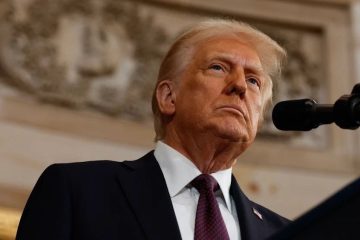
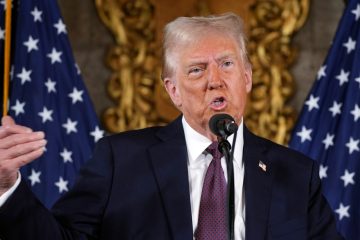
Upon returning from a week overseas, President Donald Trump immersed himself in the shutdown discussion, urging the Senate to eliminate the filibuster and reopen the government. This proposal was promptly dismissed on Friday by Republican leaders who have consistently opposed such an action. Trump urged his Republican Party to eliminate the Senate rule that mandates 60 votes to overcome objections, thereby providing the minority Democrats with a check on GOP power. In the currently divided chamber, with a tally of 53-47, Democrats have secured sufficient votes to maintain the government shutdown as they insist on an extension of health care subsidies. Neither party has genuinely sought to undermine the rule. “THE CHOICE IS CLEAR: INITIATE THE NUCLEAR OPTION, GET RID OF THE FILIBUSTER,” Trump said. Trump’s abrupt choice to involve himself in the shutdown, which has now reached its 31st day, coupled with the intense call to end the filibuster, is sure to create tension in the Senate. It may encourage senators to pursue their own compromise or lead the chamber into a renewed state of crisis.
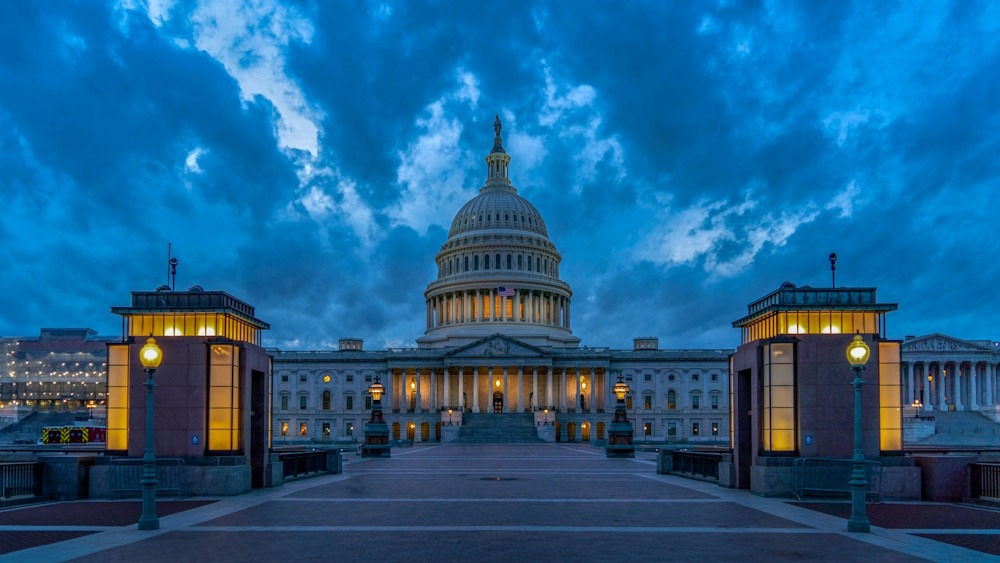
Republican leaders reacted swiftly and decisively, positioning themselves in opposition to Trump, the president whom few have had the courage to challenge. John Thune has consistently stated that he is not contemplating altering the rules to conclude the shutdown, asserting that it is crucial for the integrity of the Senate and has enabled them to obstruct Democratic policies while in the minority. According to Ryan Wrasse, “The leader’s position on the importance of the legislative filibuster is unchanged,” he stated on Friday. John Barrasso stated that his stance against altering the filibuster also remains unchanged. Mitch McConnell continues to serve in the Senate. House Speaker Mike Johnson also defended the filibuster on Friday, while acknowledging, “it’s not my call,” from his chamber across the Capitol. “The safeguard in the Senate has always been the filibuster,” Johnson said, adding that “Trump’s comments are the president’s anger at the situation.” Even if Thune sought to alter the filibuster, he presently lacks the votes necessary to accomplish this in the divided Senate. “The filibuster forces us to find common ground in the Senate,” Republican Sen. John Curtis of Utah posted on Friday morning, responding to Trump’s comments and echoing the sentiments of many of his Senate Republican colleagues. Power may shift, yet principles must remain steadfast. I strongly oppose the idea of eliminating it. For years, debate has swirled around the legislative filibuster. Numerous Democrats advocated for its removal when they held complete control in Washington, similar to the Republicans’ current position, four years ago. However, they ultimately lacked the necessary votes as a sufficient number of Democratic senators opposed the move, foreseeing that such an action would return to haunt them.
Trump’s demand arises as he has chosen not to interact with Democratic leaders regarding potential solutions to end the shutdown, which is poised to become the longest in history. In his post, he reflected on the considerable thought he put into his decision during his flight home from Asia. He noted that a recurring question throughout his trip was why influential Republicans permit the Democrats to close down segments of the government. However, later on Friday, he refrained from mentioning the filibuster again while addressing reporters as he left Washington and arrived in Florida for a weekend at his Mar-a-Lago residence. Amid ongoing discreet discussions, especially among senators from both parties, Trump has not taken a significant role. Democrats are standing firm, refusing to vote to reopen the government until Republicans engage in negotiations for an extension of the health care subsidies. The Republicans assert that they will not engage in negotiations until the government is reopened. Across the nation, the repercussions of the dysfunctional federal government shutdown are being felt in communities everywhere. SNAP food aid is set to be discontinued. With the holiday travel season approaching, flights are experiencing delays. Workers are experiencing a lack of paychecks. Americans are beginning to see the soaring health care insurance costs that lie at the heart of the impasse. “People are stressing,” said Sen. Lisa Murkowski of Alaska, as food options in her state grow scarce. “We have long surpassed the moment to move on from this.” The White House has reallocated funds to guarantee military salaries, yet it declines to utilize resources for food assistance.
Indeed, the significant legislation signed by Trump this summer brought about the largest reduction in the Supplemental Nutrition Assistance Programme, commonly referred to as SNAP, with projections indicating that approximately 2.4 million individuals will be removed from the programme. Agriculture Secretary Brooke Rollins stated on Friday that the agency is unable to release contingency funds to maintain SNAP operations, a matter currently under legal scrutiny in court. “We are holding food over the heads of poor people so that we can take away their health care,” said Rev. Ryan Stoess. “God help us,” he said, “when the cruelty is the point.” The House remains closed under Johnson, with no plans to resume the session. Senators have departed for the weekend and are scheduled to return on Monday. The upcoming inflection point arrives following Tuesday’s off-year elections, including the New York City mayor’s race, alongside elections in Virginia and New Jersey that will decide the governors of those states. Many anticipate that once the winners and losers are announced, and the Democrats and Republicans evaluate their political standing with the electorate, they may be prepared to settle in for negotiations. If the shutdown persists into next week, it would exceed the 35-day interruption that concluded in 2019, during Trump’s first term, due to his demands for the construction of the US-Mexico border wall.