Fukushima nuclear facility gearing up to activate another reactor
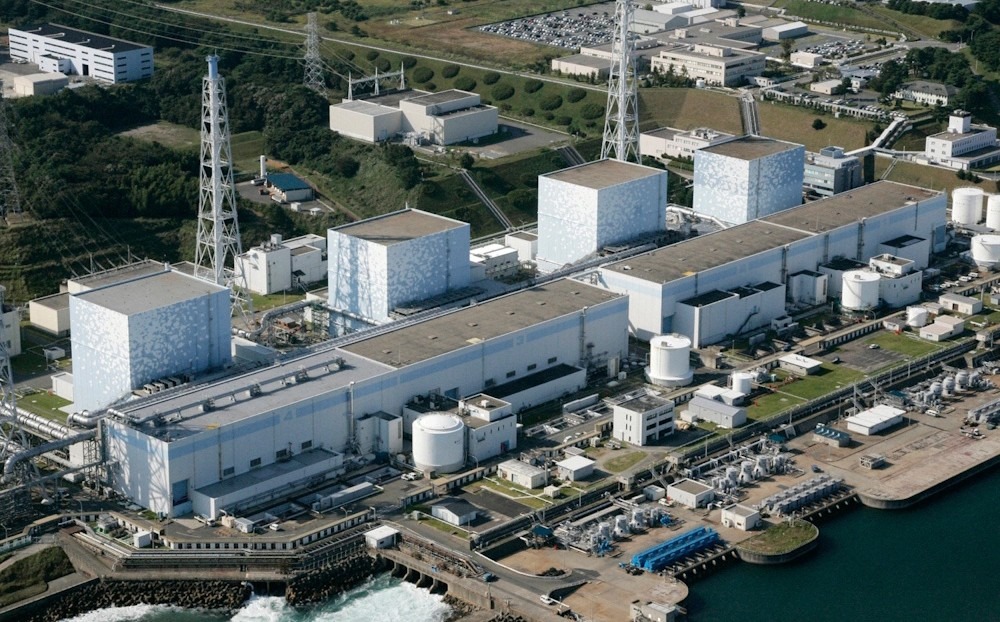
The world’s largest nuclear power plant is scheduled to restart on Wednesday in north-central Japan, marking its first operation since the 2011 Fukushima nuclear meltdown. This move comes as resource-poor Japan intensifies its reliance on atomic power to address increasing electricity demands. The initial phases of energy generation at the No. 6 reactor of the Kashiwazaki-Kariwa nuclear power plant hold significant importance, particularly as the operator is Tokyo Electric Power Company Holdings, the same utility responsible for the devastated Fukushima Daiichi plant. Concerns regarding TEPCO’s historical safety challenges at Fukushima have sparked public anxiety over the operations at the Kashiwazaki-Kariwa plant, located in a remote area susceptible to earthquakes. All seven reactors at Kashiwazaki-Kariwa have remained inactive since a year following the catastrophic events at the Fukushima Daiichi plant on Japan’s northeastern coast, which was struck by a powerful earthquake and tsunami in March 2011. This disaster resulted in meltdowns that contaminated the surrounding land with radioactive fallout so severe that certain areas continue to be uninhabitable.
TEPCO continues its efforts to restore its reputation while simultaneously managing a cleanup operation at Fukushima Daiichi, with costs projected to reach 22 trillion yen ($139 billion). Government and independent investigations attributed the Fukushima debacle to TEPCO’s poor safety culture and condemned it for collusion with safety authorities. Since 2011, fourteen other nuclear reactors have restarted across Japan; however, this marks the first instance of a TEPCO-run unit resuming production. Residents in proximity to the plant express optimism regarding the potential economic and employment advantages; however, they harbor concerns about nuclear safety and the practicality of evacuation plans, particularly in light of a significant earthquake that occurred in the nearby Noto region two years prior. A restart of the No. 6 reactor at the Kashiwazaki-Kariwa plant, located approximately 220 kilometers (135 miles) northwest of Tokyo, has the potential to produce an additional 1.35 million kilowatts of electricity, sufficient to supply power to over 1 million households in the capital region. All seven units were taken offline in 2012 as part of nationwide safety shutdowns following the Fukushima disaster, despite being unaffected by the quake and tsunami. The Kashiwazaki-Kariwa plant sustained partial damage during a 2007 earthquake, leading to safety concerns and a lack of trust among the local community. In 2009, TEPCO took action by establishing a quake-resistant command center at the compound. No. 6 was among the two reactors that successfully passed safety tests in 2017; however, it encountered an operational ban imposed by the Nuclear Regulation Authority due to significant safeguarding issues identified in 2021. It ultimately received approval in 2023. The restart comes in the wake of disclosures regarding the falsification of seismic data by a different utility during the safety evaluations of one of its reactors. This has provoked the ire of regulatory officials and undermined public trust. Evacuations would pose significant challenges. According to a government draft evacuation plan, approximately 18,600 residents living within a 5-kilometer (3-mile) radius of the plant would be required to evacuate in the event of radiation leak concerns, while around 400,000 individuals in a broader area would be advised to remain indoors.
The 2024 Noto quake resulted in moderate damage to two inactive reactors at the adjacent Shika nuclear power plant. However, the earthquake inflicted significant damage on roads and houses, rendering many areas inaccessible and trapping thousands on the narrow peninsula. Nuclear safety officials assert that such damage could render existing evacuation plans largely unworkable. Mie Kuwabara, a resident near Kashiwazaki, attended a recent protest outside TEPCO’s Tokyo headquarters. She remarked that the information provided by the utility appears to be one-sided and insufficient for the residents. Japan has reversed its post-Fukushima nuclear phaseout policy, stating the necessity for a stable and affordable energy supply, alongside the increasing costs of fossil fuel imports due to Russia’s war on Ukraine and other global conflicts. Prime Minister Sanae Takaichi aims to enhance the utilization of nuclear energy by expediting the restart of functional and safe reactors, prolonging their operational lifespan, and constructing both replacements and new reactors, alongside the advancement of next-generation models. She also aims to reduce the reliance on solar panels manufactured in China. Despite experiencing a decline in population, Japan anticipates an increase in energy demands driven by power-hungry AI data centers. Under new decarbonization targets released last year, Japan aims to increase the share of nuclear power in the country’s energy mix to 20% by 2040.
The Kansai Electric Power Co. announced last year its intention to begin surveys for the construction of a new reactor in western Japan; this would mark the first new unit since the Fukushima disaster. In the wake of the Fukushima disaster, TEPCO has taken significant steps to enhance safety at Kashiwazaki-Kariwa by reinforcing seawalls and implementing additional safety features. Workers have ensured that reactor buildings and other essential facilities are watertight, established a reservoir for emergency water injection, deployed a mobile cooling unit, and built filtered venting systems capable of significantly eliminating radioactive particles when gases must be released to avert reactor damage. TEPCO has invested over 1 trillion yen ($6.33 billion) in safety measures. As the Kashiwazaki-Kariwa No. 6 reactor resumes operations and approaches 50% of its power output capacity in approximately one week, it is expected to undergo a temporary shutdown for inspection, anticipated to occur from late January to early February. TEPCO announced that the reactor will be reactivated for a complete startup and commercial power generation by late February.