Floating LNG projects changing global gas supply
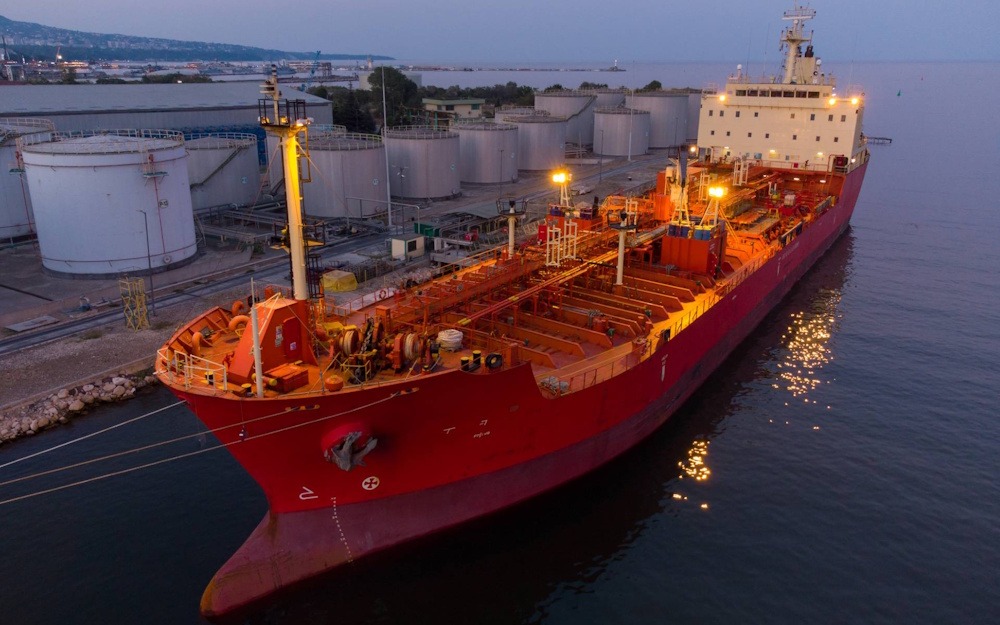
A floating liquefied natural gas plant operated by Italian energy major Eni has commenced gas supplies to Europe from offshore Congo, marking a significant development for a technology that previously faced challenges due to high costs and operational uncertainty. The vessel, named Nguya, is currently anchored in shallow waters near the Republic of the Congo, where it liquefies gas sourced from offshore fields for export to European buyers, such as Spain and Italy, according to the source. The development signifies a significant change in the commercialization of gas reserves, especially in areas where constructing conventional land-based LNG infrastructure poses challenges due to cost, complexity, or security concerns. Nguya is an innovative floating industrial facility specifically engineered to liquefy natural gas at sea. It is said to be longer than the largest US aircraft carrier and includes extensive processing equipment, such as pipes, cooling systems, turbines, and storage tanks. The vessel cools natural gas to minus 162 degrees Celsius, transforming it into liquid form. This process significantly reduces the gas volume, enabling economical transportation by tanker over long distances. The vessel was built by China’s Wison and delivered in less than three years. According to the source, storage tanks designed in Japan were constructed separately and then integrated into the hull, a process that contributed to the acceleration of construction. The project involved the conversion of the existing floating platform, Scarabeo 5, into a pre-treatment unit designed to separate gas from oil and other liquids prior to liquefaction.
Floating LNG facilities emulate the roles typically carried out by substantial land-based terminals in nations like the US, Qatar, and Australia. The floating LNG technology has yet to gain widespread acceptance, as its initial projects faced significant cost overruns and operational challenges. The Australian Prelude floating LNG vessel, operated by Shell, raised concerns regarding the project’s commercial viability due to its expenses nearing $12 billion. Nevertheless, those involved in the industry now assert that expenses have decreased markedly. Eni estimates that the construction costs for floating LNG have decreased by as much as 40 percent in recent years, now falling below $1 billion per million tonnes of annual capacity. This suggests a construction cost of under $2.5 billion for a vessel similar to Nguya, although the overall project expenses are elevated due to related infrastructure. Shipyards are increasingly adopting more standardised designs, leading to enhancements in timelines and predictability. A report indicates that FLNG terminals are gaining momentum in the global LNG market, with capacity projected to triple by 2030. The independent energy research firm reported that the global FLNG capacity is projected to reach 42 million tonnes per annum by 2030, with an anticipated increase to 55 Mtpa by 2035, nearly quadrupling the 14.1 Mtpa recorded in 2024.
Floating LNG plants enable companies to process gas offshore, thereby eliminating the necessity for extensive land-based facilities. This approach minimizes exposure to logistical challenges, regulatory delays, and security risks in politically unstable regions. This advantage is especially pertinent in Africa, where substantial offshore gas reserves exist, yet onshore infrastructure development has encountered disruptions for decades. An onshore LNG project in Mozambique experienced a five-year delay following a terrorist attack in 2021. In contrast, offshore floating LNG facilities in the region have maintained their operations. Consequently, floating plants are physically distanced from land-based conflict zones and possess the capability to function autonomously from onshore infrastructure. Numerous floating LNG projects are currently in operation or in the planning stages around the world. One notable instance is the Gimi vessel, positioned offshore between Mauritania and Senegal under a long-term lease to BP. The vessel underwent conversion from an existing tanker and is included in a model where specialized companies construct and lease floating LNG units to producers. Companies like Golar are adopting this strategy, transforming older vessels into LNG processing units, as reported. Their business model enables gas producers to circumvent significant initial investments in permanent infrastructure. Africa has emerged as a significant focal point, owing to its offshore reserves and infrastructure limitations. Other emerging regions encompass Latin America, specifically Argentina, Guyana, and Suriname, along with certain areas of the Asia-Pacific.
In Argentina, Eni is set to develop a more extensive floating LNG project offshore Vaca Muerta, utilizing multiple vessels. The project is anticipated to ultimately yield 18 million tonnes of LNG each year, on par with major land-based export terminals. The floating LNG plants encounter operational limitations as both technical and environmental factors hinder their capacity to operate in ocean waters. The restricted physical dimensions of ships impose operational constraints that dictate the amount of equipment that can be installed on board. Industry experts indicate that FLNG facilities typically utilize gas turbines instead of the electric drives found in certain contemporary onshore terminals. This choice can influence both efficiency and emissions performance, particularly as global discussions surrounding emission control intensify. The composition of gas varies among offshore fields, influencing the requirements for processing and the design of plants. Despite the drawbacks, the Floating LNG technology offers an alternative method for developing offshore gas reserves without the need for constructing permanent onshore infrastructure. The asset can be deployed more swiftly and relocated once reserves are exhausted, enabling operators to utilize the same resource across various projects.