Fed Governor Adriana Kugler resigned for trading violations
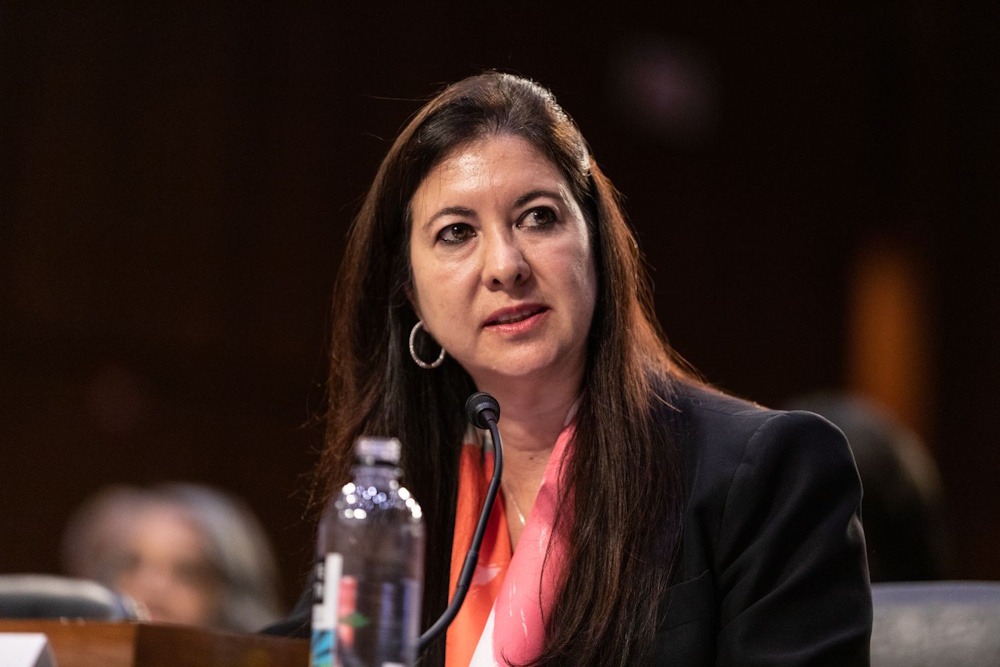
Documents released Saturday revealed that former Federal Reserve Governor Adriana Kugler, whose sudden resignation enabled President Donald Trump to appoint an ally at the US central bank, violated Fed ethics rules and was under internal investigation at the time she stepped down in August. In her final weeks at the Fed, Kugler aimed to resolve an issue regarding her financial holdings; however, Chair Jerome Powell declined her request for a necessary waiver prior to the central bank’s policy meeting on July 29-30, as reported by a Fed official. She missed the meeting and subsequently declared her resignation days later. The Office of Government Ethics on Saturday released Kugler’s latest financial disclosures, which included previously undisclosed trading in multiple individual stocks in 2024 — some of which occurred during the Fed’s blackout period — in violation of the agency’s ethics rules. Earlier this year, the matter was referred to the agency’s inspector general by Fed ethics officials, as indicated by the form. They also chose not to certify the disclosures that Kugler submitted approximately a month following her resignation. Spokesman stated on Saturday that an investigation is currently underway. Kugler’s resignation provided Trump with an unexpected chance to appoint a member to the Fed’s board during his vigorous campaign pressuring policymakers to significantly reduce interest rates. The opening ultimately went to Trump adviser Stephen Miran, who took an unpaid leave of absence from his role as chair of the White House Council of Economic Advisers and has consistently advocated for swift rate cuts. Kugler, appointed to the Fed in September 2023 by President Joe Biden, declined to comment.
The former Fed governor announced on Aug. 1 that she would step down effective Aug. 8 — nearly six months before her term was set to end — without citing a reason and after she missed the central bank’s July meeting. At that moment, the Fed stated that her absence was attributed to a “personal matter.” Ahead of that meeting, Kugler sought permission to conduct transactions to address what the Fed official described as “impermissible financial holdings.” The specific holdings involved in that request were not immediately clear. As per reports, Kugler sought a waiver from the regulations mandating that senior Fed officials secure clearance prior to engaging in specific financial transactions, as well as the restrictions against trading during designated blackout periods surrounding their policy meetings. Powell denied the request. Kugler had previously encountered issues with the Fed’s ethics rules. She admitted in disclosures last year that she breached trading prohibitions when her husband carried out several stock trades. Kugler stated at that time that her spouse made the purchases without her knowledge. The shares were subsequently divested, and Kugler was found to be in compliance with relevant laws and regulations, as stated in the disclosures.
The recently unveiled documents revealed previously unreported trading activities in 2024 involving individual stocks — a practice that is forbidden for Federal Reserve officials and their immediate family members — including Materialise NV, Southwest Airlines, Cava Group, Apple Inc., and Caterpillar. Some of the trades were executed during blackout periods, when transactions are prohibited. The transactions involved the acquisition of Cava shares on March 13, 2024, just days before a meeting scheduled for March 19-20, and the divestment of Southwest shares on April 29, 2024, occurring right before the Federal Reserve’s gathering on April 30-May 1. The disclosure additionally enumerates various fund transactions that occurred during blackout periods. A footnote related to the January 2, 2024, sale of Materialise NV shares stated: “Consistent with her September 15, 2024, disclosure, certain trading activity was conducted by Dr. Kugler’s spouse, without Dr. Kugler’s knowledge, and she affirms that her spouse did not intend to violate any rules or policies.” The disclosure encompassed the calendar years 2024 and 2025, extending through her resignation. Top Fed officials must submit disclosures on an annual basis and upon their departure from the central bank, in addition to reporting periodic financial transactions. A spokesperson for the Fed’s Office of Inspector General confirmed on Saturday that the office received a referral from the board’s ethics section concerning Kugler’s filing. “We have opened an investigation and, consistent with our practice, we are unable to comment further until our investigation is closed,” the individual stated.
In 2022, Powell implemented stricter regulations on investing and trading for policymakers and senior staff at the central bank. This came after disclosures regarding atypical trading behavior in 2020 involving multiple high-ranking officials. Boston Fed President Eric Rosengren and Dallas Fed chief Robert Kaplan both declared their early retirement following the revelations, with Rosengren attributing his decision to health concerns. The Fed’s internal watchdog ultimately cleared the pair of legal wrongdoing, yet admonished them for eroding public trust in the central bank. The new rules, which the Fed stated were intended to bolster public confidence in the impartiality and integrity of policymakers, enhanced financial disclosure requirements, among other measures. Senator Elizabeth Warren, a Democrat from Massachusetts, who has consistently advocated for stricter ethics rules at the central bank, issued a statement on Saturday urging bipartisan legislation “to make the Fed more transparent and accountable.” Senate Banking Committee Chair Tim Scott stated, “The latest scandal makes clear that the Fed still doesn’t have the guardrails or culture of accountability the American people expect. The next Fed Chair must restore integrity, strengthen transparency, and end the pattern of insiders playing by their own rules,” he added.