Epstein file disclosure may take ‘few more weeks’ says DOJ
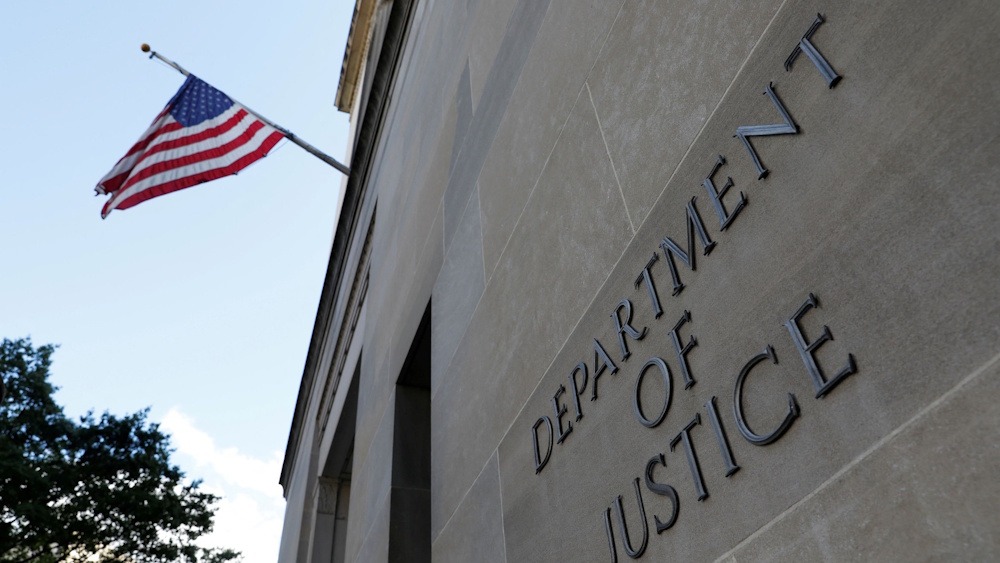
The Justice Department announced on Wednesday that it may require “a few more weeks” to disclose all records related to the late sex offender Jeffrey Epstein, following the unexpected discovery of over a million potentially relevant documents. This revelation further postpones adherence to last Friday’s congressionally mandated deadline. The announcement on Christmas Eve followed closely after a group of twelve US senators urged the Justice Department’s watchdog to investigate its inability to meet the deadline. The group, consisting of 11 Democrats and a Republican, conveyed to Don Berthiaume in a letter that victims “deserve full disclosure” and the “peace of mind” of an independent audit. The Justice Department announced via social media that federal prosecutors in Manhattan and the FBI “have uncovered over a million more documents” potentially linked to the Epstein case, marking a surprising 11th-hour development after department officials indicated months prior that they had conducted a thorough review encompassing the extensive range of Epstein-related materials.
In March, Attorney General Pam Bondi stated that a “truckload of evidence” had been generated following her directive for the FBI to “deliver the full and complete Epstein files to my office.” In July, the FBI and Justice Department indicated in an unsigned memo that they had undertaken a “exhaustive review” and had determined that no additional evidence should be released—an extraordinary about-face from the Trump administration, which for months had pledged maximum transparency. The memo failed to consider the potential existence of further evidence that officials might not have been aware of or had yet to review. Wednesday’s post did not specify when the Justice Department was made aware of the newly uncovered files. In a letter last week, Todd Blanche stated that Manhattan federal prosecutors had accumulated over 3.6 million records from sex trafficking investigations concerning Epstein and his longtime associate Ghislaine Maxwell, although many of these were duplicates of materials previously submitted by the FBI.
The Justice Department stated that its lawyers are “working around the clock” to review the documents and redact victims’ names and other identifying information as mandated by the Epstein Files Transparency Act, a law enacted last month that compels the government to disclose its files on Epstein and Maxwell. “We will release the documents as soon as possible,” the department stated. “Given the substantial amount of material, this process may require a few additional weeks.” The announcement emerged in the context of heightened examination of the Justice Department’s phased disclosure of Epstein-related documents, drawing attention from both Epstein victims and congressional representatives. Republican Rep. Thomas Massie, of Kentucky, a principal architect of the law requiring the document release, stated on Wednesday: “DOJ did break the law by making illegal redactions and by missing the deadline.” Another architect of the law, Rep. Ro Khanna, D-Calif, stated he and Massie will “continue to keep the pressure on” and highlighted that the Justice Department was releasing more documents after lawmakers threatened contempt. “A Christmas Eve news dump of a million more files only proves what we already know: Trump is engaged in a massive cover-up,” Chuck Schumer stated following the DOJ’s announcement.
“The question Americans deserve answered is straightforward: WHAT are they hiding and WHY?” The White House on Wednesday defended the Justice Department’s handling of the Epstein records. “President Trump has assembled the greatest cabinet in American history, which includes Attorney General Bondi and her team like Deputy Attorney General Blanche who are doing a great job implementing the President’s agenda,” Abigail Jackson said in a statement. Following the release of an initial wave of records on Friday, the Justice Department subsequently added more batches to its website over the weekend and on Tuesday. The Justice Department has not provided any indication regarding when additional records may be forthcoming. Documents that have been made available, such as photographs, interview transcripts, call logs, court records, and other materials, were either previously accessible to the public or significantly redacted, with many missing essential context. Previously unseen records include transcripts of grand jury testimony from FBI agents detailing interviews with several girls and young women who recounted being compensated to engage in sexual acts for Epstein. Recent disclosures include a note from a federal prosecutor dated January 2020, indicating that Trump had utilized the financier’s private plane more frequently than previously acknowledged, along with emails exchanged between Maxwell and an individual who identifies themselves with the initial “A.” They include additional references that imply the author was Britain’s former Prince Andrew. In one instance, “A” inquires: “How’s LA? Have you found me some new inappropriate friends?”
The senators’ call on Wednesday for an inspector general audit follows closely on the heels of Schumer’s introduction of a resolution that, if passed, would mandate the Senate to file or join lawsuits designed to compel the Justice Department to adhere to the disclosure and deadline requirements. In a statement, he referred to the staggered, heavily redacted release as “a blatant cover-up.” Republican Sen. Lisa Murkowski of Alaska, alongside Sens. Richard Blumenthal, D-Conn, and Jeff Merkley, D-Ore, has taken the initiative in advocating for an inspector general audit. Others who signed the letter included Democratic Senators Amy Klobuchar of Minnesota, Adam Schiff of California, Dick Durbin of Illinois, Cory Booker and Andy Kim, both of New Jersey, Gary Peters of Michigan, Chris Van Hollen of Maryland, Mazie Hirono of Hawaii, and Sheldon Whitehouse of Rhode Island. “Given the (Trump) Administration’s historic hostility to releasing the files, politicization of the Epstein case more broadly, and failure to comply with the Epstein Files Transparency Act, a neutral assessment of its compliance with the statutory disclosure requirements is essential,” the senators wrote. They stated that “full transparency is essential in identifying members of our society who enabled and participated in Epstein’s crimes.”