Chinese Export Surge Fails to Halt Economic Decline in 2025’s Toughest Quarter
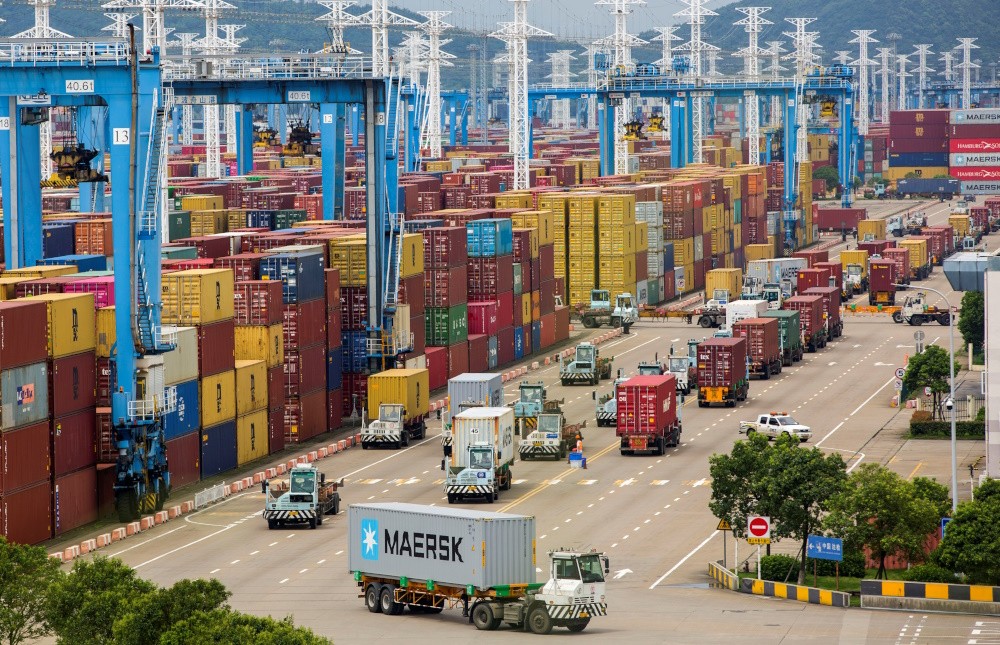
China’s economy likely experienced its slowest growth in a year during the third quarter, even amidst a surge in exports. This disconnect may prompt the Communist Party to take corrective measures at an important meeting scheduled for the coming week. As trade tensions escalate with the US, the weakness in investment, industrial output, and retail sales is undermining the momentum from record sales abroad. Data set to be released on Monday by China’s National Bureau of Statistics is expected to reveal that gross domestic product increased by 4.7 per cent in the quarter compared to a year earlier, a decline from the 5.2 per cent growth recorded in the previous three months. Retail sales are projected to have increased by 3 per cent in September, while industrial output is expected to have risen by 5 per cent — marking the weakest results of the year for both sectors. Meanwhile, fixed-asset investment is projected to have decelerated once more in the first nine months, remaining unchanged from the previous year. It has been declining since May, even in the face of significant government borrowing aimed at bolstering the spending capacity of local authorities. Public spending on infrastructure has fallen short, failing to compensate for the decline in housing investment and the reduction in funds allocated to manufacturing. Foreign firms have also been reducing their expenditures, with inbound new foreign direct investment decreasing by nearly 13 percent in the first eight months, positioning China for three consecutive years of declines. One bright spot is foreign demand, with the goods trade balance so far this year hitting a record $875 billion, according to the latest figures. The economic fragility shapes the atmosphere for the forthcoming assembly of party officials at the so-called fourth plenum in Beijing. The huddle will offer insights into their priorities for 2026-2030, as governments and investors globally advocate for a rebalancing of China’s economy towards domestic consumption.
“Beijing now faces deep structural headwinds — from fading growth drivers to a protracted property downturn and entrenched deflation — unlike the severe, yet temporary pandemic shocks during the last five-year planning stage,” Economics noted. As the US intensifies trade and technology restrictions, the external environment has become increasingly unfavorable. The IMF has maintained its prediction for China’s 2025 growth at 4.8 per cent, while anticipating a slowdown to 4.2 per cent next year — a forecast consistent with the median estimates of economists. The fund cautioned that “China’s prospects remain weak,” stating “real estate investment continues to shrink while the economy teeters on the verge of a debt-deflation cycle. Rebalancing toward household consumption — including through fiscal measures with a greater focus on social spending and the property sector — and scaling back industrial policies would reduce external surpluses and alleviate domestic deflationary pressures,” the IMF officials stated.
In other regions, key highlights will include inflation data from Japan to the UK, purchasing manager indexes from major economies, and the initial summary of a meeting by Swiss central bank officials. Following a delay caused by the US government shutdown, the Bureau of Labor Statistics is set to release the September consumer price index on Friday. The data, initially scheduled for Oct. 15, will provide Federal Reserve officials with a vital insight into inflation prior to their policy meeting the subsequent week. In a survey, economists predict that the core CPI, which omits food and fuel to provide a clearer view of underlying inflation, is expected to have risen by 0.3 percent for the third consecutive month, as increased import duties continue to gradually impact consumers. The anticipated monthly increase will maintain the annual core CPI at 3.1 percent. Despite the shutdown causing delays in most official economic data releases, BLS staff were summoned to prepare the September CPI report, which is crucial for determining next year’s cost-of-living adjustments for Social Security recipients. Despite inflation remaining above their target, Fed officials are anticipated to declare their second rate cut of the year after a two-day meeting on Oct. 28-29, citing concerns over the fragile labor market. On the agenda for private-sector economic data, a report is expected to reveal that contract closings for purchases of previously owned homes remained subdued in September. An S&P Global PMI release on Friday is expected to demonstrate modest growth in manufacturing and services activity.
In addition to the bustling week in China, Japan is set to release national CPI figures on Friday, which are anticipated to indicate that consumer inflation has stayed significantly above the Bank of Japan’s target for September. Concurrently, purchasing manager indexes released on the same day may reveal a contraction in manufacturing activity for the fourth consecutive month, despite services celebrating a full year of growth. India’s September PMI figures are expected to indicate that manufacturing activity continues to be strong. New Zealand has released its quarterly inflation data, and Malaysia, Singapore, and Hong Kong have published their September Consumer Price Index figures. New Zealand, Thailand, and Japan are set to release their monthly trade data, while South Korea will provide 20-day trade statistics for October. On the policy front, China is expected to maintain its 1- and 5-year loan prime rates unchanged on Monday. Bank Indonesia is set to consider another reduction to its benchmark rate on Wednesday, as it evaluates the impact of mild inflation in contrast to the declining rupiah. A day later, the Bank of Korea is anticipated to maintain its base rate at 2.50 percent, while potentially hinting at a reduction in November as inflation remains subdued and economic growth slows. On Thursday, Uzbekistan establishes its rate policy.
The week’s highlight could very well be the preliminary assessment of October purchasing manager indexes throughout western Europe. These will disclose how manufacturing and services companies in Germany, France, and the UK evaluated the activity at the beginning of the fourth quarter, indicating any momentum — or absence of it — during a period when President Donald Trump’s tariffs are constraining exports to the US. When it comes to concrete statistics, Britain might attract the most focus. On Tuesday, public finance figures will provide crucial insights for Chancellor Rachel Reeves as she gears up for a challenging budget in November. Inflation the following day will be pivotal for Reeve’s plans and the Bank of England, which is cautiously approaching further rate cuts while attentively observing persistent price pressures. The data are expected to indicate an acceleration to 4 percent, marking the fastest pace in a year and a half. In the euro zone, multiple speakers from the European Central Bank are set to make remarks ahead of the pre-decision quiet period that begins on Thursday. Executive Board members Isabel Schnabel and Philip Lane will be present on Monday, followed by President Christine Lagarde on Wednesday. Meanwhile, France’s ongoing struggles to pass a budget are likely to persist after Prime Minister Sebastien Lecornu successfully navigated two no-confidence votes in the past week. Political strife may ultimately lead to the downfall of his government. The situation was worsened by Friday night’s unexpected decision by S&P Global Ratings to downgrade the country. The decision signifies that France has forfeited its double-A rating from two of the three leading credit assessors in just over a month, which may compel certain funds with stringent investment guidelines to divest from the nation’s bonds. An update from Moody’s Ratings is expected at the end of the upcoming week, although the firm presently maintains a stable outlook on the country. Belgium is also on the calendar for a potential review from S&P Global Ratings, whose perspective on its credit score is already tilted towards the negative. On Tuesday in Switzerland, the export numbers for September will provide insight into the nation’s trade standing at the conclusion of a quarter marked by the imposition of the highest US import tariffs on any advanced economy. The government referenced those levies when adjusting its growth forecast for the upcoming year. Thursday marks a significant turning point for the Swiss National Bank as it unveils its inaugural summary of a rate meeting discussion, aiming to adopt the transparency standards set by the Fed.
Turning south, data on Wednesday is expected to reveal that South African inflation has increased to 3.4 per cent in September, up from 3.3 per cent. Policymakers may once again be persuaded to maintain rates at their current level for a second consecutive meeting next month as they uphold the South African Reserve Bank’s stringent 3 percent target for price growth, which they indicated in July is their favored benchmark. One day later, the central bank is set to release its semi-annual monetary policy review, with Governor Lesetja Kganyago providing further insights. Several monetary decisions are set to take place in the region: On Tuesday, the National Bank of Hungary is poised to maintain its rate at 6.5 percent, having resisted government appeals for a reduction. According to a survey, Turkey’s central bank is expected to reduce rates once more on Thursday — by 100 basis points to 39.5 percent. Nonetheless, certain respondents in the poll anticipate a hold following an unexpected rise in price growth in September, which reached 33.3 percent year-on-year. The Bank of Russia is set to reveal its most recent rate decision on Friday, following reductions at the previous three meetings that have lowered the benchmark to 17 per cent. Governor Elvira Nabiullina has cautioned that the expanding federal budget deficit, fueled by expenditures related to the war in Ukraine, could restrict the potential for additional cuts.
In a subdued week, Mexico could encounter a second consecutive month of negative GDP-proxy figures for August, primarily attributed to tighter public spending and the trade policies of Trump. In a similar vein, August data from Argentina may indicate that activity continues to decline as President Javier Milei’s shock therapy impacts the economy. Additionally, Argentina is expected to release the government confidence index from Torcuato Di Tella University, which has recently experienced a decline and may have further decreased in light of the peso and local assets sell-off. The outcome of the Oct. 26 midterm elections holds significant implications for Milei. Colombia’s August GDP-proxy report offers a regional contrast, arriving shortly after July data indicated that growth began with remarkable momentum in the second half, consistent with central bank forecasts. Mid-month inflation reports from Brazil and Mexico are expected to reveal ongoing price pressures. Sticky and elevated core readings are likely to keep Brazil’s central bank on hold at 15 per cent into 2026. However, readings in Mexico are very unlikely to see Banxico pause its easing cycle after 10 straight rate cuts.