China restricts rare earth supplies, affecting US Semiconductor, AI growth
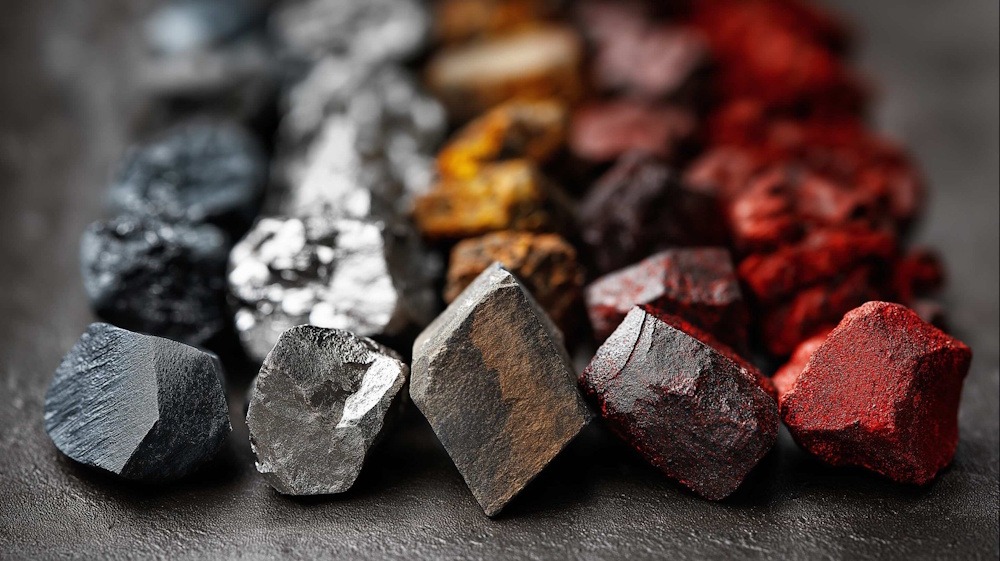
China has abruptly taken steps to regulate global access to rare earth elements – REEs for short – which are essential for the production of semiconductors and microchips. Beijing is able to do so due to its dominance in the rare earths market. In 2023, China produced 240,000 tons, which accounts for 68.6% of global REEs. This rise highlights the fragility of the USA, which views China as its primary strategic competitor. Moreover, China is responsible for 90% of all REE processing, a statistic that escalates to 99% for heavy rare earth processing. The US Geological Survey reports that 40% of rare earth reserves are located in China. Commenting on Beijing’s recent export controls, Dean W. Ball stated, “This is a very big deal.” China has established extensive authority over the global semiconductor supply chain, implementing export license requirements for all rare earths utilized in the production of advanced chips. “If enforced aggressively, this policy could mean ‘lights out’ for the US artificial intelligence boom, and likely lead to a recession/economic crisis in the US in the short term.” On 9 October, China’s Ministry of Commerce revealed its controls through six announcements. These encompass super-hard materials, specifically synthetic diamonds; rare earth equipment and raw materials, including processing machinery and chemicals; holmium, erbium, thulium, europium, and ytterbium medium/heavy elements; lithium battery and graphic anode materials; foreign-made products containing Chinese rare earths; and rare earth technologies such as mining, smelting, magnet, and recycling technologies.
The initial four controls are set to be implemented on 8 November. The penultimate one takes effect on 1 December, while the latter was implemented immediately. President Donald Trump responded immediately, posting on Truth Social, “They’re becoming very hostile and sending letters to countries throughout the world, that they want to impose export controls on each and every element of production having to do with rare earths, and virtually anything else they can think of, even if it’s not manufactured in China. Nobody has ever seen anything like this…” Trump characterized the situation as “great trade hostility which came out of nowhere”. Ironically, the same could be said of Trump’s own unpredictable approach to foreign-trade policy. He stated, “There’s no way that China should be allowed to hold the world ‘captive’, but that seems to have been their plan for quite some time, starting with the magnets and other elements that they’ve quietly amassed into somewhat of a monopoly position, a rather sinister and hostile move, to say the least.” The US president vowed to respond, and he indicated that an impending APEC meeting with Chairman Xi Jinping in South Korea might be at risk. “Dependent on what China says about the hostile ‘order’ that they’ve just put out, I’ll be forced, as president of the United States of America, to financially counter their move. For every element that they’ve been able to monopolize, we have two.” And thus, it intensifies. China pledged to implement countermeasures should the USA impose 100% tariffs on Chinese imports. A spokesperson for the Ministry of Commerce stated on 12 October, “Resorting to threats of high tariffs isn’t the right way to engage with China.” If the US continues to act unilaterally, China will firmly implement corresponding measures to protect its legitimate rights and interests. Our stance on a tariff war is unwavering – we do not desire one, yet we are not intimidated by the prospect of one.
The spokesperson asserted, “US actions have seriously harmed China’s interests and undermined the atmosphere of bilateral economic and trade talks.” China expresses strong opposition to these actions. The United States has, for an extended period, expanded the definition of national security and misused export controls, implementing biased measures against China and enforcing unilateral ‘long-arm jurisdiction’ restrictions on a diverse array of products. The United States has implemented export controls on over 3,000 items, whereas China’s list includes more than 900 items. China is not hesitant to leverage its REE policy as a tool for geopolitical maneuvering. For instance, on April 4, the Ministry of Commerce implemented export restrictions on seven rare earth elements in response to American tariffs. Ball of the Foundation for American Innovation stated, “This is a costly decision for them [China] too, and not without risk. These controls are being imposed on the whole world, not just the US.” In numerous ways, China is reflecting the economic-security strategies employed by the US in recent years. It likely believes it is entitled to equality and is opposed to its REEs being utilized in American weapons that could potentially be used against it in the future. China is currently in the process of developing an architecture and export license system aimed at monitoring and enforcing its regulations. This initiative is designed to manage risk, prevent dual-use leakage, and respond appropriately to the actions of the USA. Ball posits that China is undertaking this action to secure leverage over the USA in anticipation of the upcoming Xi-Trump meeting. This may be the case; however, China’s interpretation of US actions could offer a more comprehensive understanding.
Chucheng Feng asserts that this trade escalation is a direct consequence of the US Bureau of Industry and Security broadening export controls to encompass blacklisted entities and their subsidiaries on 29 September. Feng asserts that unilateral American action disrupted a delicate balance. Indeed, China’s readout of a 19 September Trump-Xi phone call cautioned against unilateral actions that would undermine “the results of multiple rounds of talks”. Beijing likely perceives that the USA has directly contravened that warning. A forthcoming US decision to implement port entry fees on Chinese-owned vessels likely exacerbated the situation. Feng stated, “From Beijing’s perspective, these actions aren’t only substantive escalations, but further confirmation of the low credibility of the Trump administration.” Beijing is effectively reactivating its April strategy – escalating first to compel a negotiation reset, rather than waiting passively for the next discussions. Hutong Research’s founder stated: “Beijing’s underlying logic is straightforward: the US is more vulnerable to a rare earth supply shock than China is to incremental export controls on semiconductors.” In recent weeks, Chinese policymakers have conveyed unmistakable indications of their readiness to expedite the domestic semiconductor supply chain at any cost, even if it entails enduring short-term inefficiencies. This instills confidence in Beijing that the leverage of rare earths is more impactful than the pressures of chip exports. In a negotiation setting, it will likely pursue a significant reduction in tariffs in exchange for stable REE flows. Ryan Hass remarked, “This is the new reality of US-China relations.” China has dedicated the past several years to developing tools that respond to US actions and underscore its own leverage over the situation. This action aligns with PRC behavior throughout the year – maintain a strong stance, strike at the US in vulnerable areas, while keeping the possibility for negotiation alive.”
Hass asserts that, notwithstanding considerable US-China interactions, “Under the surface, the mega-trend of the relationship is that both countries are pursuing strategies to reduce dependence and insulate themselves from each other.” He further assessed, “China’s leaders believe they’re making progress in reducing dependence on the US and West and finding ways to weaponize chokepoints for their own advantage.” China’s exports to the US, as a share of total exports, have been declining and are currently under 15%. Xi has positioned self-reliance as a pivotal element of his national agenda. China’s earlier success in weaponizing rare earths and magnets to compel Trump to retreat on the trade war may have resulted in the PRC becoming overconfident in its leverage within the relationship. Hass continued, “Under Trump, America’s efforts to reduce dependence on China have not taken the form of a coordinated campaign like in China, but they’ve been a visible feature of America’s foreign policy … A mutual agreement existed that a cessation of escalation benefited both parties. It provided them with both the time and the space necessary to cultivate greater self-reliance. Trump’s strong reaction to China’s new export controls indicates that he perceived Beijing as having violated that implicit agreement. Ball agreed, stating “it’s time for the US to get serious about export controls on semiconductor manufacturing equipment”. He continued, “Because we’ve been mostly unserious about this issue, China has stockpiled most durable equipment needed to make semiconductors; so most controls will not have an immediate effect.” However, certain consumable materials essential for semiconductor manufacturing remain beyond China’s domestic production capabilities. Moreover, these consumables are frequently degradable, indicating that there is a limit to how much one can stockpile.
Ball concluded, “This exact thing has been high on my list of nightmare scenarios for US-China tech competition, but understood correctly, it’s also an opportunity.” He stated, “It was high time the USA expanded its rare earth capacity.” Gracelin Baskaran stated: “Even before these latest measures, the US defense industrial base faced significant challenges and had limited production capacity and limited ability to rapidly scale to meet rising defense technology needs.” The new restrictions will only exacerbate these vulnerabilities, further widening the capability gap and enabling China to accelerate the growth of its military strength more rapidly than the United States, particularly as tensions escalate in the Indo-Pacific region.” Another expert, Rush Doshi stated, “The American approach has been unserious.” We initiated a trade war lacking preparation, allies, and a strategy to mitigate our own vulnerabilities. It appears we are facing a setback. The Trump team retains options to recalibrate the situation, and it is misguided for Beijing to force Trump into a corner. “Lots of uncertainty ahead,” he predicted. Doshi also noted: “Beijing seems a little rattled by the global response, but is resolved to keep the regime … Concerns are mounting regarding the international response to their actions. They emphasized (twice) verbatim that these export control measures on rare earths are not prohibitions or bans. They are unwilling to lift the controls. They also emphasized that these controls are their sovereign right. No response has been announced regarding Trump’s threats. They assert the standard line: ‘they do not want to fight, but aren’t afraid of fighting.’ “This suggests they may not want to see further escalation.”
Doshi stated that the essential point is that “Trump wants this regime withdrawn.” Beijing is unlikely to take that action, but is making efforts to assure that it will not be implemented in a punitive manner. Clearly, that is not a trustworthy commitment from Beijing, and the positions of the US and PRC are in conflict. Ball advised, “I’d retaliate strongly, but in a targeted manner. The ultimate route to de-escalation here is tariffs and broader trade war policy moves.” He emphasized that the events highlight “the urgency for the US plus allies/partners to accelerate domestic efforts to mine and refine rare earths”. Ball acknowledged that although China provides these commodities in large quantities and at low prices, REEs are “fundamentally, just commodities.” We can make them. Hass anticipates additional developments before Trump and Xi reach South Korea. “I don’t anticipate significant concessions from either side to the other, however.” I do not expect either leader to significantly alter his current stance between now and the end of the month. If the two leaders ultimately convene in Korea, it will be to establish a course, direction, and parameters regarding future competition. Beijing aims to utilize the meeting to convey enhanced stability and predictability in the relationship. “I wouldn’t bet on major deliverables.” Some remain optimistic that Chinese export controls may not be as severe as anticipated, and that China will not arbitrarily enforce them to the detriment of all. The USA allows the sale of computer chips globally for civilian purposes, yet hesitates at the prospect of these chips being utilized in Chinese weaponry. In a similar vein, China may permit REEs for civil applications to remain unaffected. Regrettably, trade frictions stemming from strategic competition and national security have become commonplace.