Bill Gates asserts that climate change ‘will not lead to humanity’s demise’
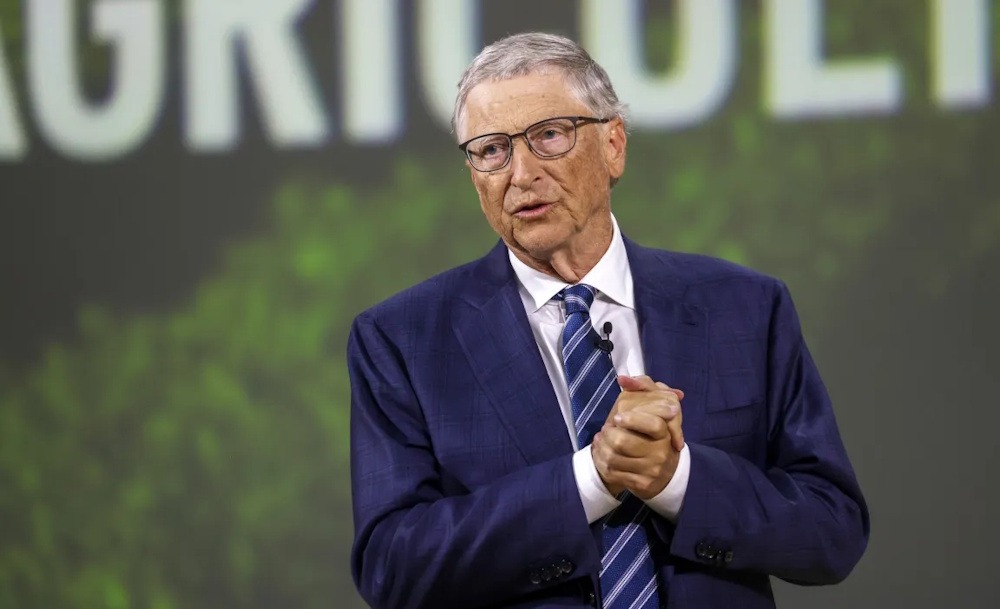
Bill Gates, the Microsoft co-founder who has invested billions of his own money to highlight the dangers of climate change, is now countering what he describes as a “doomsday outlook” and seems to have altered his perspective on the risks associated with a warming planet. In a detailed memo issued on Tuesday, Mr. Gates aimed to mitigate the alarmism that he claimed is often employed by many to characterize the impacts of increasing temperatures. Instead, he urged a shift in focus towards enhancing the quality of life in the developing world. “Although climate change will have serious consequences — particularly for people in the poorest countries — it will not lead to humanity’s demise,” he wrote. “People will be able to live and thrive in most places on Earth for the foreseeable future.” Coming just four years after he published a book titled “How to Avoid a Climate Disaster,” Tuesday’s memo seems to represent a significant shift in how Mr. Gates, who is worth an estimated $122 billion, is approaching the challenges posed by a rapidly warming world. Michael Oppenheimer remarked that Mr. Gates was establishing a misleading dichotomy “usually propagated by climate skeptics” that contrasts efforts to address climate change with foreign aid for the impoverished.
“Despite his efforts to make clear that he takes climate change seriously, his words are bound to be misused by those who would like nothing more than to destroy efforts to deal with climate change,” Mr. Oppenheimer said. The Gates memo comes just one week ahead of the convening of world leaders in Belém, Brazil, for the United Nations’ annual climate summit, referred to this year as COP30. Mr. Gates, who celebrated his 70th birthday on Tuesday and has been present at the event in past years, will not be taking part this time. He chose not to provide any remarks regarding his memo. In the last ten years, Mr. Gates has invested significant portions of his personal wealth advocating for policies aimed at decreasing the greenhouse gases that are perilously warming the planet. He has invested in companies focused on clean energy and initiatives aimed at assisting impoverished communities in adapting to rising seas, increasing heat, fires, drought, and the intensification of storms and floods. In 2015, Mr. Gates established Breakthrough Energy, a venture fund aimed at supporting innovative clean energy start-ups with significant potential.
A climate policy group was established in Washington to advocate for strategies aimed at reducing emissions. “Climate change is already affecting most people’s lives, and when we think about the impact on our families and future generations, it can feel overwhelming,” he wrote in an essay in 2023 that was published on the website of Breakthrough Energy and has since been taken down. “The scale and speed of the transformation required to build a clean energy future is unprecedented.” In March, Breakthrough Energy revealed significant reductions that encompassed the disbanding of its climate policy group. In May, Mr. Gates revealed intentions to wind down the Gates Foundation, which has invested billions in climate-related initiatives, including a $1.4 billion pledge to assist farmers in developing nations in adapting to a warming planet. In response to the Trump administration’s cuts to foreign aid budgets and the closure of the U.S. Agency for International Development, Mr. Gates has shifted a significant portion of his charitable contributions to address the gap created by the U.S. government, concentrating on health and poverty issues in the developing world. “He saw the U.S.A.I.D. situation as more pressing, and something where he could be more effective,” said Johannes Ackva.
Mr. Gates remains committed to investing in clean energy start-ups through initiatives such as the Breakthrough Energy Catalyst program, Breakthrough Energy Ventures, and the Breakthrough Energy Fellows. In the memo, Mr. Gates did not indicate any alteration in the approach to financing climate ventures. He also continues to invest in nuclear energy. Last week, TerraPower obtained essential federal approval as it endeavors to introduce a new type of reactor to the market. In the memo, Mr. Gates stated that the world ought to invest in initiatives aimed at reducing the cost of clean energy and discovering methods to make manufacturing, agriculture, and transportation less polluting. However, the memo aimed to shift efforts from the campaign to cut greenhouse gas emissions, prioritizing alternative methods to enhance human well-being and alleviate suffering. He referred to climate change as “a very important problem” that requires resolution, but noted that “the doomsday outlook is causing much of the climate community to focus too much on near-term emissions goals.” And that was “diverting resources from the most effective things we should be doing to improve life in a warming world,” he wrote. The planet is experiencing a rate of warming unprecedented in recorded history. Last year was the hottest on record. Experts caution that if nations do not swiftly transition from fossil fuel consumption, the Earth is poised to face severe weather events and other transformations at a pace that may outstrip human adaptability. Low-lying island nations are witnessing their land vanish beneath the rising seas, a consequence of melting glaciers and polar ice sheets. Last year, an estimated 62,775 individuals lost their lives due to heat in Europe. Mr. Gates aimed to redirect the conversation from temperature metrics, stating in the memo that “temperature is not the best way to measure our progress on climate.”
David Callahan remarked that Mr. Gates might be attempting to shift the conversation surrounding climate change amid a politically charged environment where Republicans are openly antagonistic toward initiatives aimed at tackling the problem. “One could imagine this being a continuation of wanting to move to the center and not wanting to be a target of the Trump administration,” Mr. Callahan stated. Mr. Callahan remarked that Mr. Gates’s shift in messaging aligns with research indicating that alarmist rhetoric regarding climate change is not the most effective method to inspire action among individuals. “The result of a lot of research is that it’s much better to lean into the optimism than the pessimism,” Mr. Callahan stated. Numerous scientists assert that the planet’s swift warming may lead to a sequence of irreversible tipping points, potentially resulting in cascading impacts. These scenarios encompass alterations in ocean currents, the vanishing of ice sheets, and the widespread mortality of coral reefs. Mr. Gates did not address any of those scenarios in the new memo; however, he has previously discussed them. “There are points at which when the corals die off, they never come back,” Mr. Gates stated in 2021. “This is acidifying the ocean, and all the aqua ecosystems die off as that acid level goes up.” As forests dry out, they become vulnerable to fires and infestations that decimate tree populations, resulting in a significant reduction in the number of trees. “As the sea level goes up, the beaches go away.”