Asia’s Carbon Capture Push May Boost Emissions 25B Tonnes by 2050
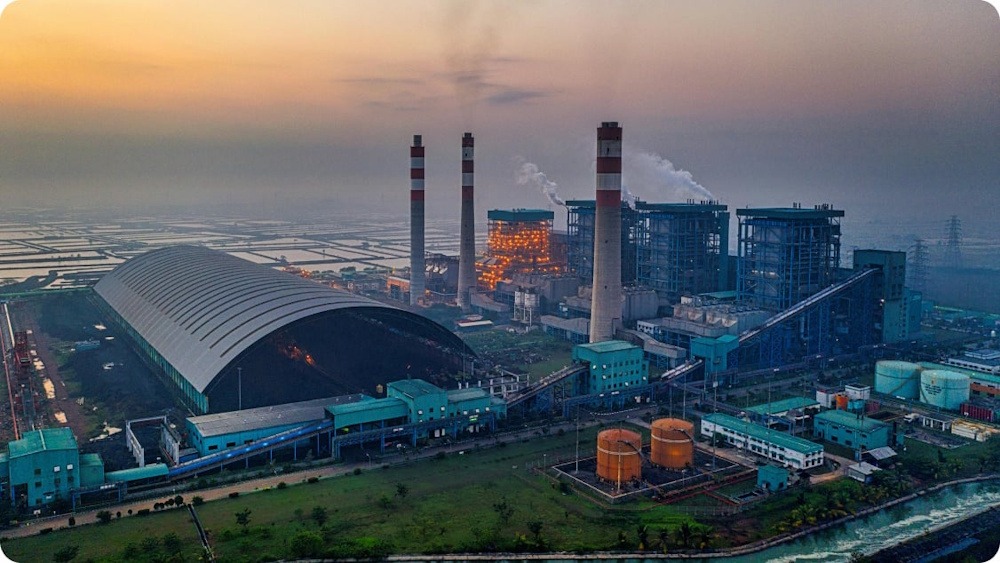
A new report indicates that the increasing support for carbon capture and storage among Asian countries to mitigate fossil fuel emissions could lead to nearly 25 billion tonnes of additional greenhouse gases by 2050, jeopardizing the Paris Agreement and putting their economies at risk. Carbon capture and storage is a technology aimed at capturing carbon dioxide emissions from sources like power plants and industrial facilities, stopping them from entering the atmosphere, and securely storing them underground in geological formations. The study conducted by Climate Analytics, a prominent global climate science and policy institute, evaluated both current and future carbon capture and storage deployment in China, India, Japan, South Korea, Indonesia, Thailand, Malaysia, Singapore, and Australia. These countries collectively represent over half of the world’s fossil fuel consumption and greenhouse gas emissions.
It stated that emissions from numerous Asian economies, particularly India and other developing nations in South and Southeast Asia, exhibit no immediate indication of peaking and swiftly declining, yet must urgently attain this critical threshold. Although China and India, Asia’s largest emitters, remain largely detached from the CCS nexus involving Japan, South Korea, Southeast Asia, and Australia, their future trajectories will significantly impact global climate action. China currently boasts the second-largest CCS pipeline in Asia, following Australia, whereas India has yet to establish a significant presence in this area. The report highlighted that India, a significant producer of steel and cement, may increasingly adopt CCS in these challenging sectors to reduce emissions. However, more affordable and lower-risk alternatives like renewable energy, electrification, and green hydrogen are currently accessible to tackle industrial emissions. “Leading regional emitters China and India have less clear CCS plans.” China already boasts a robust CCS presence, and it stands as the most advanced nation in the deployment of zero-emissions technologies. “If China or India turn more decisively to future CCS dependence, it could have disastrous climate results,” the report said.
India stands as the world’s second-largest consumer of steel and is projected to experience an annual demand growth of 6.3 percent from 2025 to 2030. The study indicated that cement consumption in India and other South Asian countries could increase by over 40 per cent between 2025 and 2035. The report also cautioned that CCS projects globally have frequently fallen short of expectations, with capture rates typically hovering around 50 per cent instead of the 90-95 per cent asserted by the industry. Implementing CCS in the power sector may result in electricity prices being at least double that of renewable energy supported by storage. Japan and South Korea have offered significant financial and policy backing to CCS, while Australia and Southeast Asian nations are establishing themselves as key carbon storage centers. China has initiated support for new projects as part of its 2023 Plan for Green and Low-Carbon Technology Demonstration.
“We find a strong possibility that Asian countries could increase their support for CCS through to 2050, risking a significant lock-in of unabated fossil fuels and stranded asset costs, let alone risks to the world achieving the Paris Agreement 1.5 degrees Celsius warming limit,” said James Bowen, lead author of the report. “Asia is at a crossroads: while these countries haven’t yet gone down a high CCS route, many have tailored their CCS policies to protect their fossil fuel industry, especially in Japan, South Korea and Australia. This is a very risky strategy, not only to the Paris Agreement, but to these economies themselves,” said Bill Hare. The report indicated that a “deliberate low-CCS pathway” focusing on the expansion of renewable energy, electrification, and efficiency would serve as a more cost-effective and climate-aligned choice for the region.