Artemis II: NASA’s $100 Billion Mission with Multiple Goals
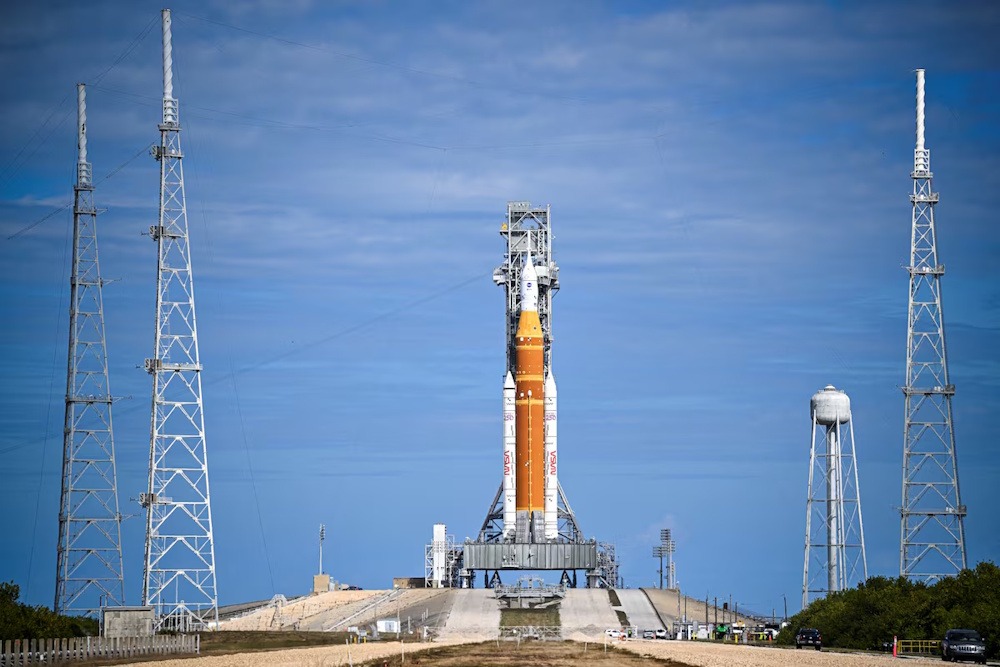
Nasa achieved the moon landing in 1969 with a definitive objective from the beginning: to be the first nation to put boots on the lunar surface. The US found itself in a fierce space race with the Soviet Union, and the Apollo 11 landing played a crucial role in solidifying America’s position as the dominant geopolitical superpower during the intense period of the Cold War. Nasa is now returning with its Artemis program. Starting April 1, a crew of four will embark on a journey around the moon, serving as a precursor to a landing planned for this decade. But why allocate nearly $100 billion to replicate a journey that NASA has already undertaken? It may pertain to surpassing its existing competitor, China. It could be sustainability — establishing a lunar base to facilitate further exploration. Alternatively, it may be more straightforward: Nasa is returning to the moon as it seeks destinations for its astronauts, with the lunar surface being the next logical venue to demonstrate its technological capabilities. “Human spaceflight is at the core of the institution of Nasa going back to Apollo, and the self identity of a large swath of the agency,” said Casey Dreier. The Apollo program established a benchmark for Nasa, emphasizing the need for a human spaceflight initiative that propels US space exploration into the future.
Following Apollo, NASA’s crewed initiatives focused on the Space Shuttle and subsequently the International Space Station, both situated in low-Earth orbit rather than venturing further into space. Nasa envisions a future where humans can journey further into the solar system, following the retirement of the Shuttle and the impending conclusion of the ISS this decade. “Now that, in a sense, Nasa has done low-Earth orbit and done the reusable Shuttle, it’s now the moon,” Dreier stated. In 2017, US President Donald Trump signed an executive order aimed at returning humans to the moon. Thanks to a blend of hardware already in development and ongoing political support, the Artemis program has persisted. The moon is also in astronauts’ reach with current technology, unlike Mars. “We went to the moon and we have wanted to go back ever since,” stated Lori Garver. “And the combination of hardware and technology have allowed us to finally be in a position where that’s in sight.” The Artemis missions aim to collect scientific data regarding the moon and its resources, with plans for astronauts to establish a base there, the design of which NASA revealed on Tuesday. The lunar outpost will provide astronauts with a deep-space environment to live, work, and conduct experiments that may be applicable to living on Mars. Nasa has also stated its intention to utilize Artemis to establish a “lunar economy.”
The agency envisions that resources on the moon, including ice hidden in frigid craters and valuable lunar minerals, may play a crucial role in sustaining bases and potentially generating business opportunities for companies. Any industry will most likely be geared toward sustaining lunar exploration. “When we think of the space economy, it will not be so centered around Earth,” said Clayton Swope. “In the long run, though, we’ll probably come to a point where we derive value from something in space that has value in space. So when I think of things like water on the moon, that will probably have value when there’s activity happening beyond Earth.” The Artemis program’s primary vehicles have been under development for decades. Throughout this period, the geopolitical landscape has evolved: China has achieved notable advancements in its space program and intends to send humans to the moon by the decade’s end. For lawmakers and defense hawks, that has added urgency for returning. Some individuals, such as former NASA administrator and former Senator Bill Nelson, have asserted that China might assert rights to resources that could hinder the US’s ability to explore the moon.
Some analysts warn that China could also militarise the moon, potentially putting US space assets at risk. It resembles the space race during the Cold War. However, NASA is intended to concentrate on peaceful exploration. Despite the waning rhetoric surrounding international cooperation under the current administration, the Artemis program has primarily focused on demonstrating that the US and its allied nations can still accomplish remarkable feats together. Apollo was “anchored around national security, economic security, science, and then what I would call prestige,” Swope stated. “I believe those are truly the same reasons that drive our desire to return to the moon today.”