AI Seen Powering 40% Surge in Global Trade by 2040
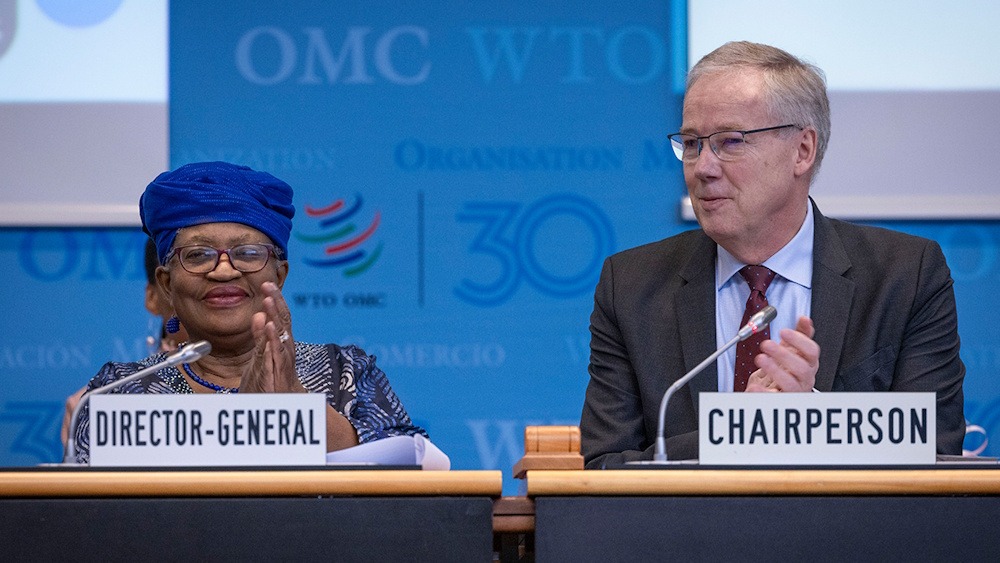
According to the World Trade Report released by the World Trade Organization on Wednesday, artificial intelligence has the potential to enhance the value of cross-border trade by nearly 40 per cent by 2040, driven by productivity gains and reduced trade costs. Nonetheless, for AI and trade to play a significant role in fostering inclusive growth, it is essential that policies are established to close the digital divide, enhance workforce skills, and ensure an open and predictable trading environment, the report emphasized.
“AI possesses immense potential to reduce trade costs and enhance productivity. However, access to AI technologies and the capacity to participate in digital trade remains highly uneven,” stated WTO Director-General Ngozi Okonjo-Iweala. The report indicates that AI has the potential to drive substantial growth in trade and gross domestic product by the year 2040. It projects a rise in global trade by 34-37 percent across various scenarios, which depend on differing levels of policy and technology among low-, middle-, and high-income economies. In the meantime, projections indicate that global GDP may experience an increase ranging from 12 to 13 percent across various scenarios. Trade serves as a significant catalyst for fostering inclusive growth supported by AI, facilitating economies in obtaining essential AI-enabling goods, including raw materials, semiconductors, and intermediate inputs. The report indicates that global trade in these goods reached a total of $2.3 trillion in 2023.
US trade encompasses various aspects, including US import tariffs set for 2025 and the implications of reciprocal tariffs. These elements play a crucial role in shaping the economic landscape and international relations. This decision is significant for trade relations, particularly in the context of the export challenges faced by tailor-made goods. The impact of US tariffs remains a critical issue for both nations. The United States has dismissed India’s World Trade Organization claim regarding auto tariffs, citing national security as the basis for its decision.
“With the right mix of trade, investment and complementary policies, AI can create new growth opportunities in all economies.” With the appropriate frameworks in place, trade can serve as a pivotal element in ensuring that AI benefits everyone. “The WTO is committed to supporting this effort,” stated DG Okonjo-Iweala. Bridging the digital infrastructure gap is poised to enhance growth. The report indicates that should low- and middle-income economies reduce their digital infrastructure gap with high-income economies by 50 per cent and embrace AI more extensively, these economies are anticipated to experience income increases of 15 per cent and 14 per cent, respectively. The report highlights the necessity for transparent and consistent trade policies, emphasizing that the quantity of quantitative restrictions imposed on AI-related goods has surged significantly over the years, increasing from 130 in 2012 to almost 500 in 2024, a trend largely influenced by high- and upper middle-income economies.
Access to goods that enable AI technology is still inconsistent, as bound tariffs can soar to as high as 45 percent in certain low-income economies. The report emphasized that investing in education and training, along with implementing suitable labour market policies, can play a crucial role in preventing the deepening of inequality within economies.